Software: The intelligent driver behind warehouse automation and robotics
Automated warehouses run on more than equipment. Complicated software tech stacks within a warehouse manage the complexities of human and automated workflows: WMS, WCS, MFC, SCADA, and PLC are just a few of the software layers that exist to manage these warehouses. Learn where Swisslog's software portfolio fits in and how it can help simplify your operations.

A warehouse is a constant balancing act: goods coming in, orders going out, and countless decisions in between about where to store inventory, what to allocate, what to prioritize, how to sequence, how to handle exceptions, how to resolve errors, and so much more. As operations scale and add automation and robotics, that balancing act becomes too complex and fast-moving for disconnected systems bolstered by spreadsheets to manage effectively.
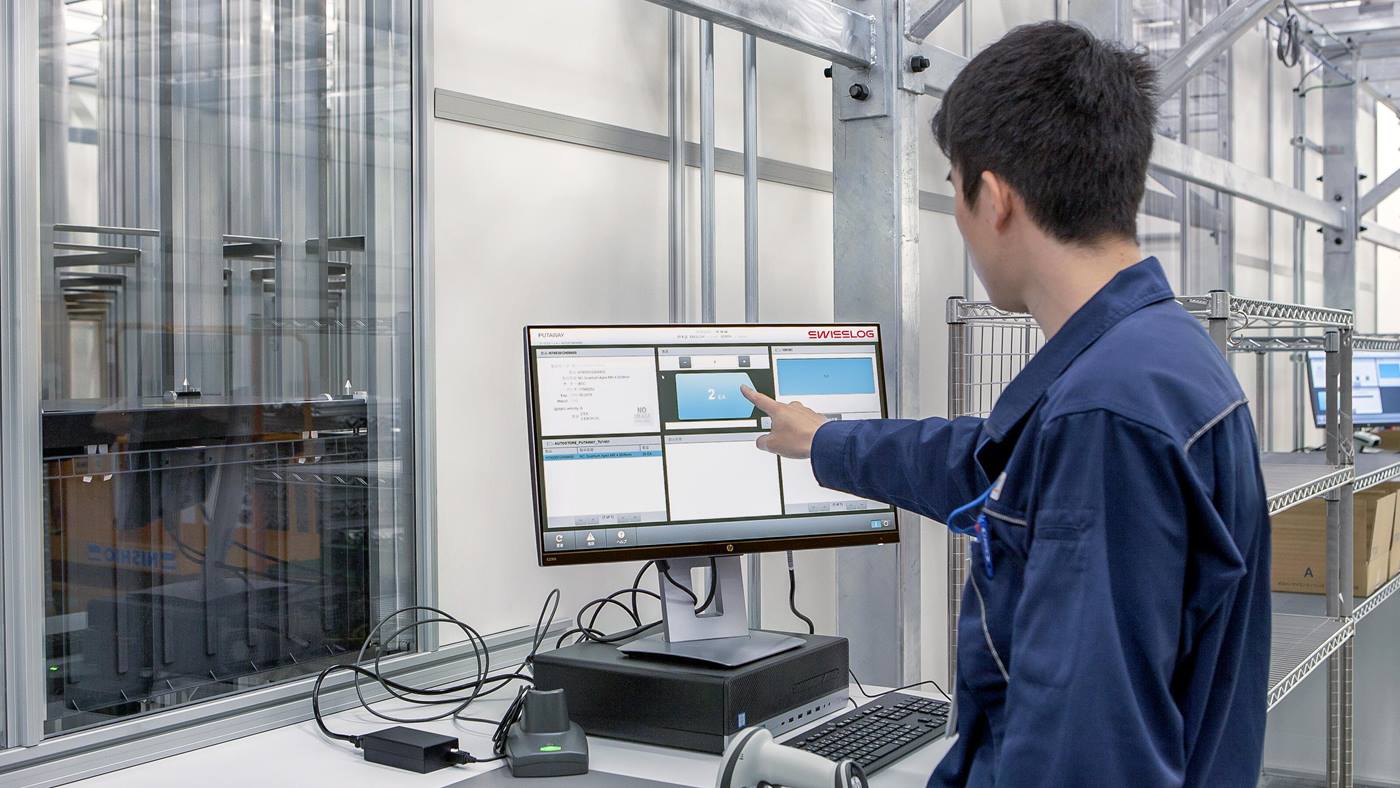
Intelligent warehouse software orchestrates people, locations, inventory, orders, automation, and robots into one synchronized operation: deciding at the millisecond level what happens next, tracking all the detail and data points along the way, and giving operations teams the visibility into progress with ability to intervene before small issues become missed shipments.
Software has become even more important to optimal warehouse performance than the automation itself.
What role does software play in the warehouse?
Warehouse software covers several distinct layers of operations, each responsible for different functions. At a high level, it needs to answer 4 ongoing questions:
- What are the business priorities, processes, and directives? (WMS or ERP)
- Given the current system state, automation, availability, progress, and inventory, what needs to happen next, and in what priority? (end-to-end system planning)
- Is everything on track, flowing smoothly as expected and if not, why and what needs to be adjusted? (execution)
- Who, what, where, how should the next tasks be assigned to: a workstation, a robot, an ASRS, a conveyor? (real-time control)
Real-time operational data: the foundation of automated system orchestration
Automated warehouse operations depends on real-time, hyper-accurate, high-speed data management: knowing equipment status and availability, managing communications between host systems while simultaneously exchanging constant messaging with automated subsystems, managing what stock is available and where it is located, all while executing the pipeline of orders across these systems.
With automated processes, data is no longer static, with inventory and orders continuously moving between storage and handling areas, in and out of storage locations, across equipment, robots, and workstations. In this complex environment, real-time data management is the single most critical software capability - this is the reason modern warehouse execution software exists.
Warehouse software layers
ERP: Enterprise Resource Planning
An ERP is the core system of record for the entire enterprise, serving as the master database for corporate finance, procurement, human resources, and high-level inventory valuation. It manages macro-level orders, inventory, and purchasing across the global supply chain, delegating order fulfillment to a specific WMS and network location.
WMS: Warehouse Management System
A WMS category of enterprise software application that directs and executes warehouse, distribution or fulfillment center operations – regardless of level of automation.
WMS core capabilities
- Business rules/logic, fulfilment and operational processes
- Receiving, putaway, and inventory management, order management and wave planning, picking, packing, staging, shipping, business rules and process definition, resource allocation and task assignment, device and equipment integration
- Reporting and analytics
WMS extended capabilities
- Labor management / performance optimization
- Process Optimization
- Inventory Slotting, yard management, Value-added services, and 3PL billing,
- Warehouse control and execution in semi-automated environments
While highly effective at planning the "what" and "why" of fulfillment, most WMS lack real-time visibility and orchestration of automation layers, making it dependent on control systems to be the brain of floor-level automation systems.
WCS: Warehouse Control System
WCS has evolved as a bridge between WMS and MFC or lower-level control or PLC systems. Acting as the intermediary, it works to execute the WMS business priorities and plan across the flow of automation. Core capabilities include routing and sorting logic, machine-level communication, subsystem management, and process and work execution. Often lacking high-level intelligence, data depth and availability, system real-time visibility, and general processing power, it is often limited in its ability to optimize and relies on WMS to override decisions and correct errors, resulting in delays and longer cycle times.
MFC: Material Flow Control
MFC is a specialized on-the-ground traffic controller that sits between a higher-level system (like a WMS or WCS) and the physical machine controls (PLCs). It translates general transport instructions into exact destination tracking, managing the physical routes of goods across conveyors, cranes, shuttles, and sorting stations.
SCADA: Supervisory Control and Data Acquisition
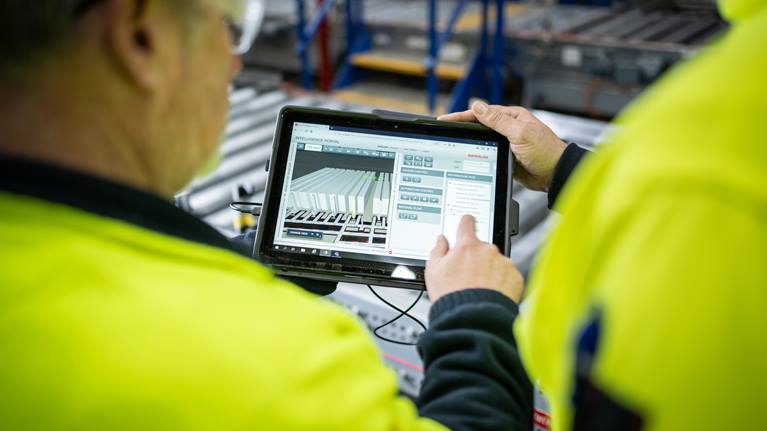
SCADA sits closest to the equipment layer, often embedded in or receiving messages directly from PLCs to continuously capture real-time status, health metrics, performance tags, and sensor information. It translates raw machine data into graphical Human-Machine Interfaces (HMIs), giving operators a live visual map with alarming and event logging. It tracks faults and errors to alert maintenance teams of blockages, unresponsive or offline equipment, and mechanical failures. It is generally built as a standalone system for equipment maintenance and is not tied into business and operational processes.

Before go live

During realization

After go-live
Onboarding, training, 24x7 technical support and ongoing software maintenance keep systems running as operations evolve
Frequently asked questions
What is a WMS?
A WMS is a category of enterprise software application that directs and executes warehouse, distribution or fulfillment center operations – regardless of level of automation.
What is a WES?
A WES is a newer generation of software built for highly automated warehouse environments. It provides the operational power to run automated fulfillment operations in real time — with full visibility into processes, performance, automation, and productivity. It's the real-time orchestrator across business processes, material flow, labor, and automation.
What's the difference between a WMS and a WES?
A WMS plans and manages to high level business goals, rules, and processes: what should happen. While a WES orchestrates fulfilment iterations in real-time execution across automation, robots and people in real-world dynamic environments: what actually happens. Complex automated sites typically need both.
How does inventory management change with automation?
In manual or lightly automated operations, inventory can be tracked periodically through a WMS. As automation increases, inventory is constantly in motion, so accurate tracking and allocation requires real-time inventory visibility, managed by a WES working alongside the WMS to execute replenishments and manage putaway strategies.
What IT services does an automation project need?
Beyond the software itself, automation projects need expert solution consulting to scope the approach, project management, testing and emulation, commissioning and infrastructure setup, and PLC or controls software to integrate directly with higher-level software. After go-live, ongoing services such as onboarding, training, 24x7 technical support and software maintenance keep the system running as operations evolve.
How is inventory visibility managed?
While the WMS manages warehouse level inventory, subsystem inventory is typically managed by WES. A WES tracks inventory continuously as it moves through putaway stations, automated storage arrays, in and out of active picking stations, and during transport. It periodically updates WMS to ensure both systems have aligned and accurate inventory records. A WES also provides access to inventory records and transactions for subsystems where it is actively managing inventory.
Do I need to replace my WMS to add automation software?
No. SynQ picks up where the WMS or ERP leave off. It can interface to existing WMS or ERP, extending the business logic and fulfilment processes while owning real-time execution and system visibility.
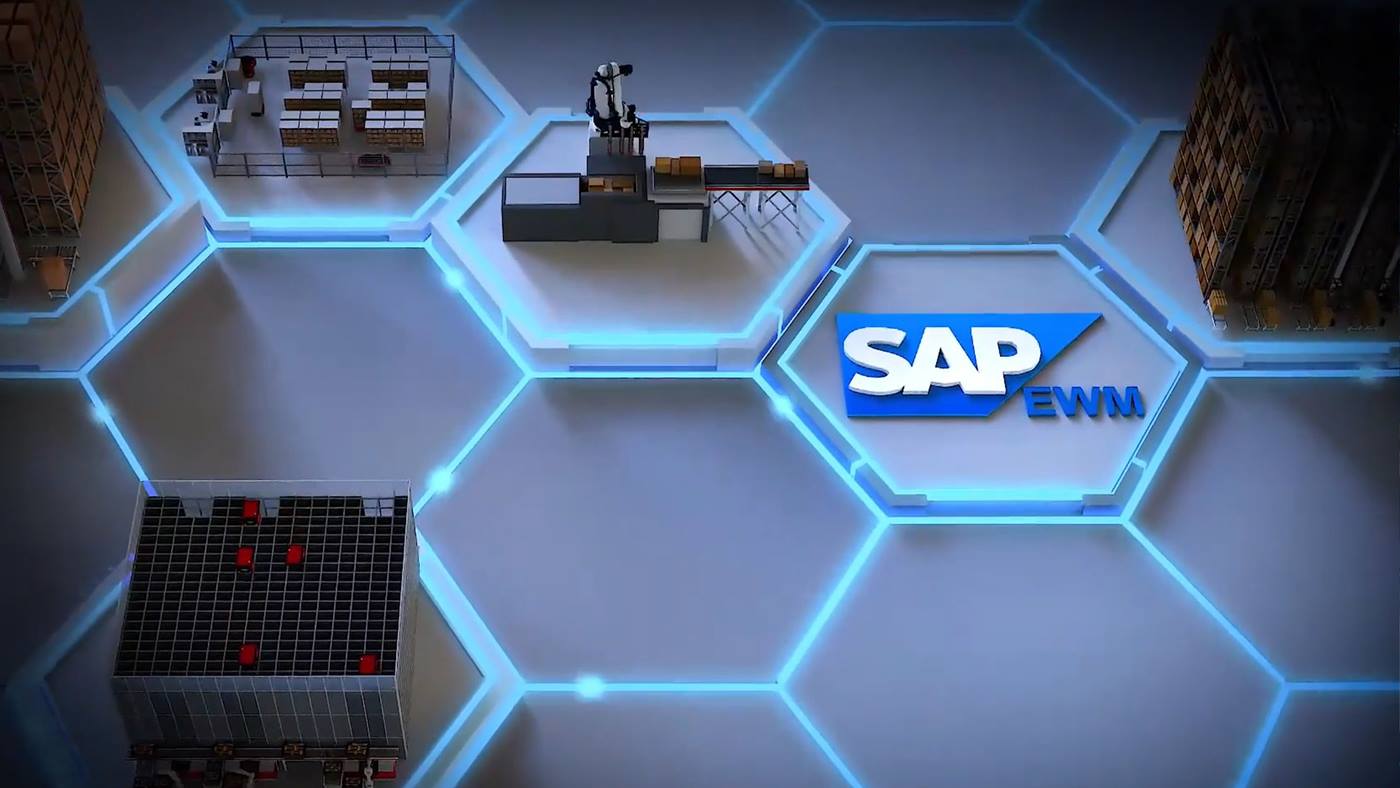
Does Swisslog support SAP EWM?
Yes. Swisslog has certified expertise implementing and integrating SAP EWM with automated warehouse operations both standalone and with SynQ as the WES and SAP EWM as the host