What defines an automated distribution center?
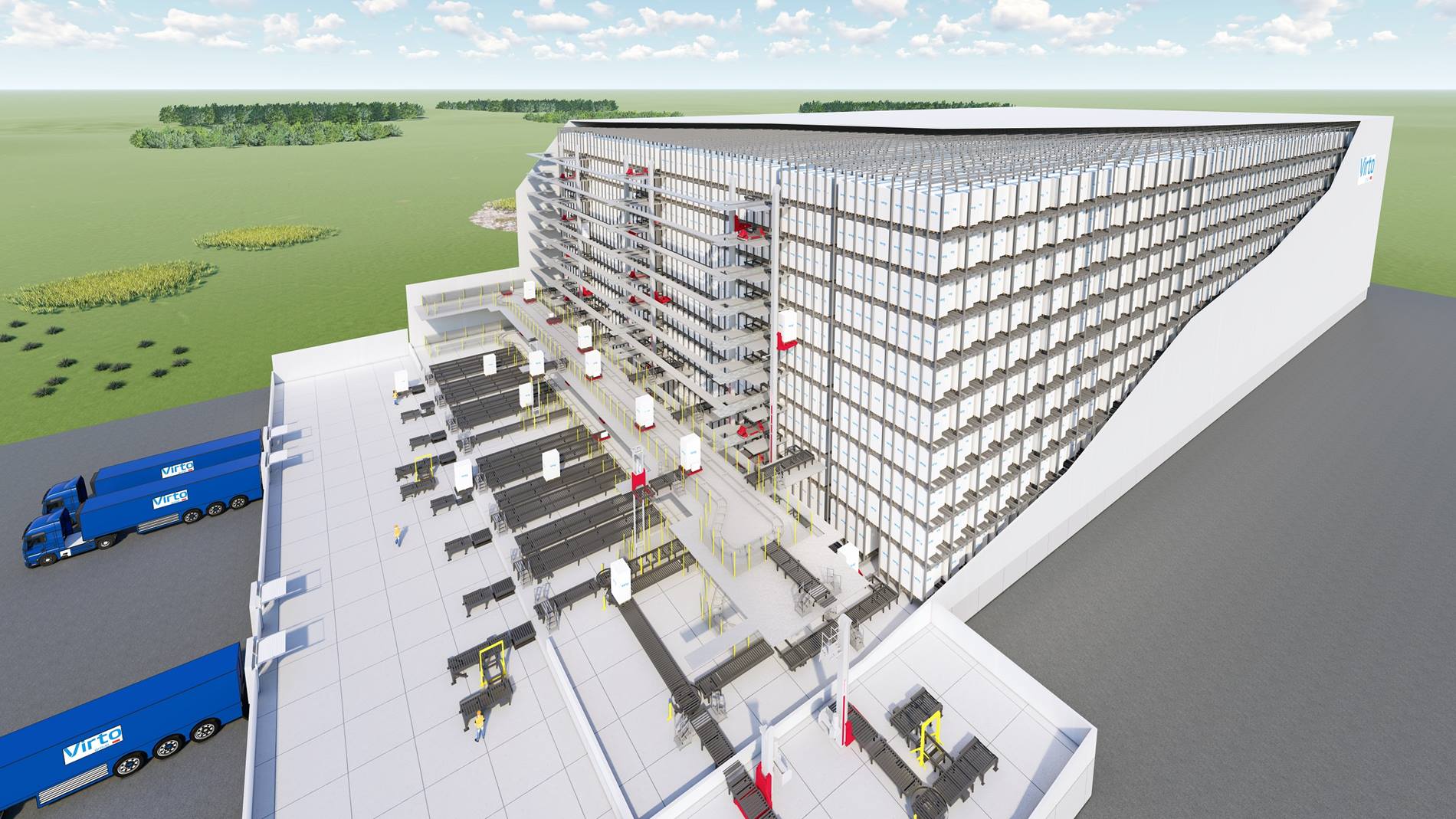
An automated distribution center (ADC) is a distribution facility where coordinated hardware and software move inventory through every major process step, with minimal human travel and minimal manual handling. The key word is coordinated. Public warehouse automation literature describes it well: warehouse automation
combines advanced physical equipment with smart software to store, sort, and move products with little or no human intervention (Oracle NetSuite, November 2024). That pairing of physical equipment and software is non-negotiable.
Real-time synchronization is the defining operational trait. Orders arrive in the system and are immediately translated into device-level instructions: a stacker crane receives a retrieval command, a conveyor segment speeds up, a picking station lights up an item position. These instructions fire in sequence, within milliseconds of each other, across every piece of equipment at once. That is what separates a real ADC from a warehouse that simply owns some automation.
Buyers choose this model for four concrete outcomes: higher throughput per square foot, better order accuracy, greater storage density (often two to four times higher than conventional racking), and less dependence on scarce warehouse labor. Automated facilities process orders faster and can handle unit loads ranging from pallets to boxes to individual totes.
Automation intensity also matters. A partially automated facility automates one or two zones, usually storage or sortation, while picking and packing stay largely manual. A highly or fully automated ADC automates every major material flow, and relies on people for exception handling, quality checks, maintenance, and oversight rather than routine tasks. Most enterprise projects land somewhere along this spectrum. The right design depends on throughput targets, SKU profiles, facility footprint, and budget.
combines advanced physical equipment with smart software to store, sort, and move products with little or no human intervention (Oracle NetSuite, November 2024). That pairing of physical equipment and software is non-negotiable.
Real-time synchronization is the defining operational trait. Orders arrive in the system and are immediately translated into device-level instructions: a stacker crane receives a retrieval command, a conveyor segment speeds up, a picking station lights up an item position. These instructions fire in sequence, within milliseconds of each other, across every piece of equipment at once. That is what separates a real ADC from a warehouse that simply owns some automation.
Buyers choose this model for four concrete outcomes: higher throughput per square foot, better order accuracy, greater storage density (often two to four times higher than conventional racking), and less dependence on scarce warehouse labor. Automated facilities process orders faster and can handle unit loads ranging from pallets to boxes to individual totes.
Automation intensity also matters. A partially automated facility automates one or two zones, usually storage or sortation, while picking and packing stay largely manual. A highly or fully automated ADC automates every major material flow, and relies on people for exception handling, quality checks, maintenance, and oversight rather than routine tasks. Most enterprise projects land somewhere along this spectrum. The right design depends on throughput targets, SKU profiles, facility footprint, and budget.