What is the difference between manual and automated picking systems?
Manual picking systems rely on human workers to pick orders. Automated picking systems use one or more types of automation to simplify and speed the process. Both fall into two categories: person-to-goods and goods-to-person.
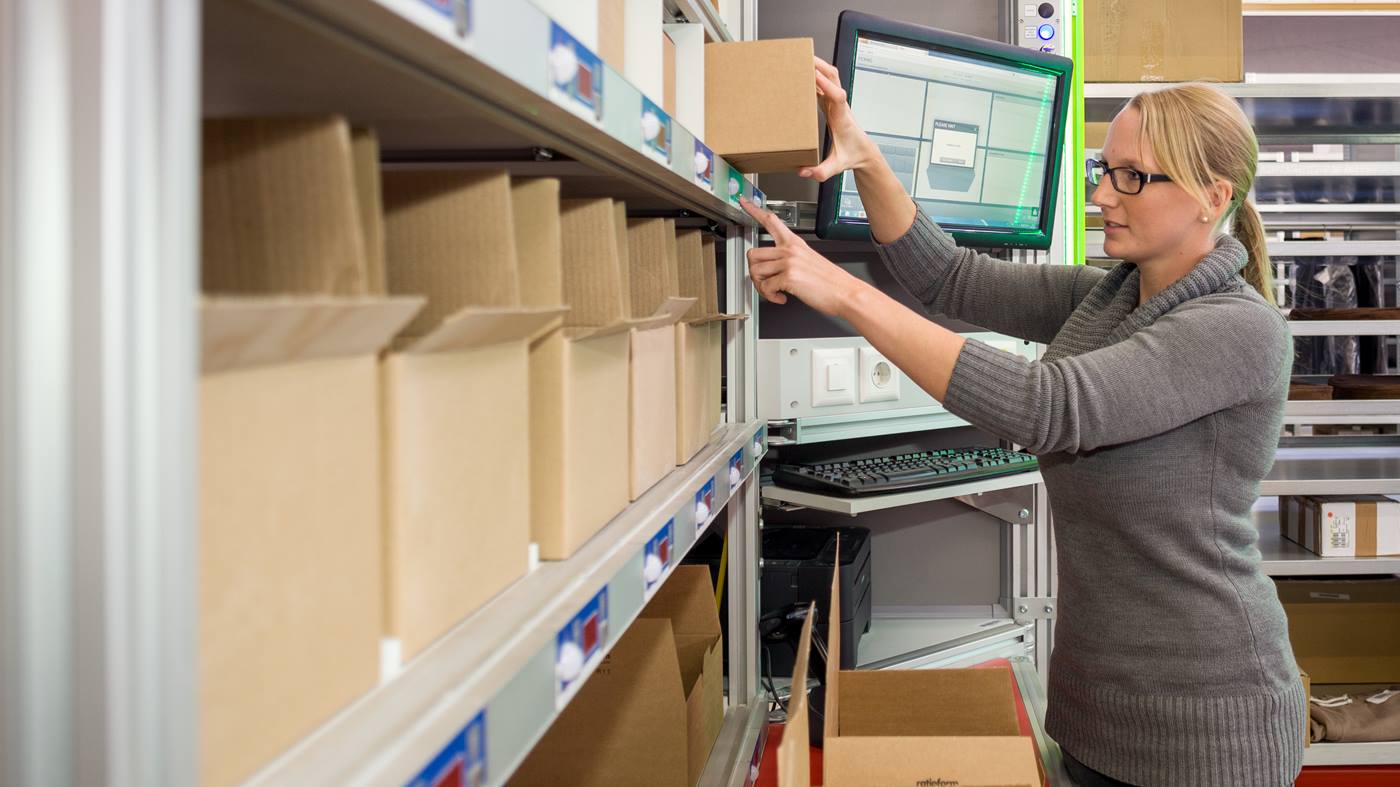
In person-to-goods systems, workers move among warehouse aisles to find and select products. These systems can incorporate elements of automation, such as pick-to-belt processes where workers place products onto conveyor belts that reduce travel distance.
In goods-to-person systems, SKUs are brought to stationary picking stations. Eliminating worker travel time, which accounts for over 50% of picking time, significantly improves picking speed.
Historically, picking has been a human task because it requires visual identification, flexible handling, and problem-solving. However, recent advances have enabled autonomous piece-picking robots capable of picking even in unstructured environments. Most warehouses today rely on a mix of manual and automated systems to combine human flexibility with cost-effective, accurate automation.
SWISSLOG PERSPECTIVE
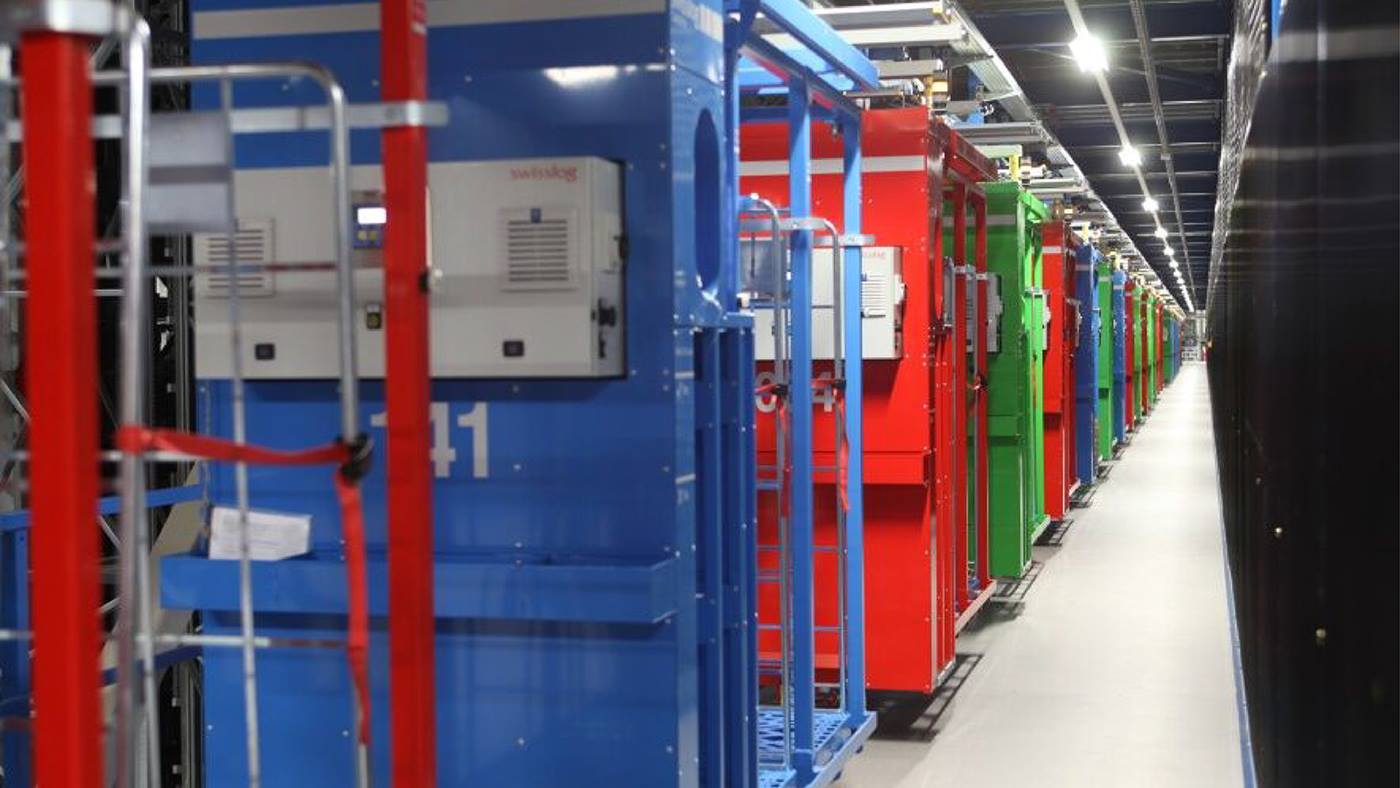
Swisslog's CaddyPick system is a semi-automated monorail picking station that moves between warehouse storage areas, stopping for human workers to place products in pick slots. The caddy vehicles include easy-to-use screens displaying errors, security sensors to mitigate accident risk, and weight monitoring software to ensure order accuracy.
What are the types of automated picking systems?
Automated picking systems fall into three categories: automated product retrieval solutions, automated picking guidance systems, and robotic piece and pallet picking.
Automated product retrieval solutions
When it comes to moving products from storage to picking stations, modern warehouses have a wide range of options:
AGVs and AMRs: Transport products through a warehouse without an operator. AMRs navigate dynamically using integrated technology; AGVs follow a fixed path.
ASRS: Combine robotics, mechanical components, and software to retrieve products without assistance. High-density storage solutions that optimize warehouse space and improve efficiency.
Mini-load and unit-load ASRS: High-density, high-throughput ASRS handle either small items (mini-load) or larger, heavier items such as pallets (unit-load).
Vertical lift modules: Columns of trays and retrieval mechanisms make the most of warehouses with high ceilings without requiring heavy operating equipment.
Carousels: Automated shelving systems move along tracks, bringing products to pickers. Can be arranged horizontally or vertically depending on warehouse configuration.
Robotic cube storage: Autonomous robots move through grids of bins stacked vertically and horizontally to retrieve stock, optimizing space and speed.
Automated picking guidance systems
Automation does not always involve robots. Many types of picking automation improve worker picking speed at stations or in warehouse aisles:
Pick-by-voice: Warehouse staff receive picking orders through a headset. Accurate and hands-free compared to RF barcode scanners, though limited by warehouse noise levels.
Pick-by-light: Lights illuminate the correct SKUs for workers to pick. Picking location is limited by where the technology is installed.
Pick-by-RF terminals: RF technology incorporated into a wearable arm device. Workers receive picking instructions and confirm completion on the device.
Automated picking guidance helps workers find stock quickly, often without needing to know the item name. Most guided picking technology works closely with warehouse management systems (WMS), providing precise locations and notifying pickers of stockouts.
Robotic piece and pallet picking
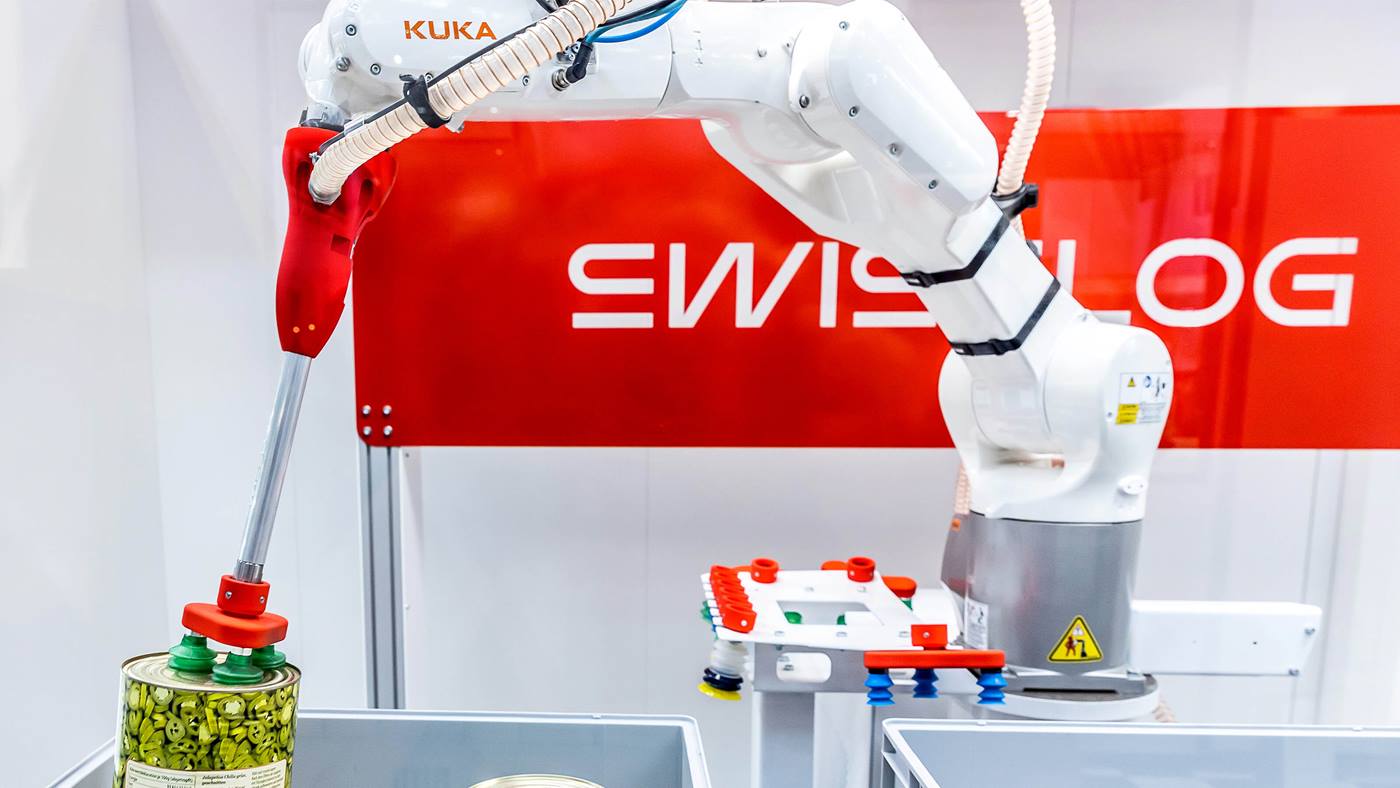
Robots equipped with specialty end-effectors and intelligent software can now perform picking autonomously. Piece-picking robots work with automated item retrieval systems to increase picking speed, reduce labor costs, and improve throughput, operating 24/7 without losing accuracy due to fatigue. Pallet-picking robots reduce headcount, increase efficiency, and improve working conditions by handling the heavy lifting of layering grouped items onto pallets.
SWISSLOG PERSPECTIVE
Swisslog's ItemPiQ is a fully automated robotic piece-picking solution capable of continuous learning. It comes trained to recognize and process SKUs and can continue to learn new SKUs without programmer involvement. ItemPiQ works with any standard WMS, so companies can get started right away without a complete system overhaul.
How does automated picking improve warehouse efficiency?
Automated picking improves warehouse efficiency across six dimensions: pick speed, accuracy, staffing resilience, worker safety, inventory management, and scalability.
Picking automation increases pick speed
Automated goods-to-person solutions such as ASRS and carousels eliminate worker travel, which typically consumes 50% of order picking time. Companies typically see picking time halved after implementing automation. McKinsey reported one global logistics company achieved a 200% increase in picking productivity by integrating AMRs into the picking process
Automation improves picking accuracy
Skilled warehouse staff are prone to fatigue during long shifts, which increases mispicks and other errors. Automated goods-to-person solutions mitigate this risk, and robotic piece-picking solutions are designed for accuracy, with many providers reporting accuracy levels close to 100%.
Automated picking solutions reduce staffing challenges
In the United States, while almost 400,000 warehousing jobs opened in June 2026, nearly 300,000 warehouse workers either quit or were terminated. Automated picking helps staff maintain throughput even when employees leave or demand rises.
Automation can reduce worker strain
Goods-to-person picking improves worker safety and comfort by eliminating the need for heavy machinery such as forklifts and by offering ergonomic workstations designed for long-term use.
Automated picking optimizes inventory management
Automating picking helps improve inventory control and visibility to:
- Reduce the risk of stockouts
- Ensure the correct SKUs are included in each order
- Accurately update customers on product availability
- Reduce product expiration by managing first-in, first-out picking
- Decrease theft and maintain a clear audit trail
- Picking automation boosts scalability
Many automated solutions have modular designs. As demand grows, warehouses can add additional units with minimal downtime and training, increasing productivity without completely overhauling existing processes.
What are the cost and throughput tradeoffs for automated picking?
Automated picking costs include capital investment, installation, maintenance, and training. Gains that offset these costs include reduced labor, faster throughput, improved accuracy, higher storage capacity, and better working conditions. The key is evaluating total cost of ownership, not just the upfront investment.
Typical costs
- Capital investment in equipment and software, including licensing fees
- Installation fees and potential productivity losses during installation
- Repairs, spare parts inventory, and maintenance (service contracts)
- Staff training and site preparation, including infrastructure upgrades
Gains that offset costs
- Reduced labor costs: increase picking output without increasing headcount, reduce reliance on temporary staffing agencies.
- Increased active pick facings: easy-to-access areas holding fast-moving stock.
- Faster throughput: meet customer service level agreements (SLAs) and consumer demand.
- Improved working conditions: ergonomic picking stations reduce physical strain.
- Accurate order fulfillment: mitigate mispick risk and associated costs such as returns shipping and processing.
- Higher storage capacity: allow for more inventory to be held within the facility.