Ready for the Next: Swisslog reveals five pillars of future-ready supply chain automation
13. maj 2026
What separates automation that lasts from automation that limits you? Swisslog shares the five pillars every supply chain leader should consider for success in modern logistics.
Swisslog, a global leader in warehouse automation and intralogistics solutions, has published a framework that addresses a key industry issue: the difference between automation that works when it is first introduced and automation that continues to function as the business evolves. 'Ready for the Next' sets out five principles every operation must apply when evaluating whether its automation is built for the long term.
The cost of getting that wrong is rarely immediate. Outdated or inflexible systems will reveal themselves through capacity constraints, costly retrofits, and technology decisions that become harder to unpick the longer they're left. Swisslog's framework closes that gap by grounding automation investment in long-term outcomes rather than point-in-time delivery.
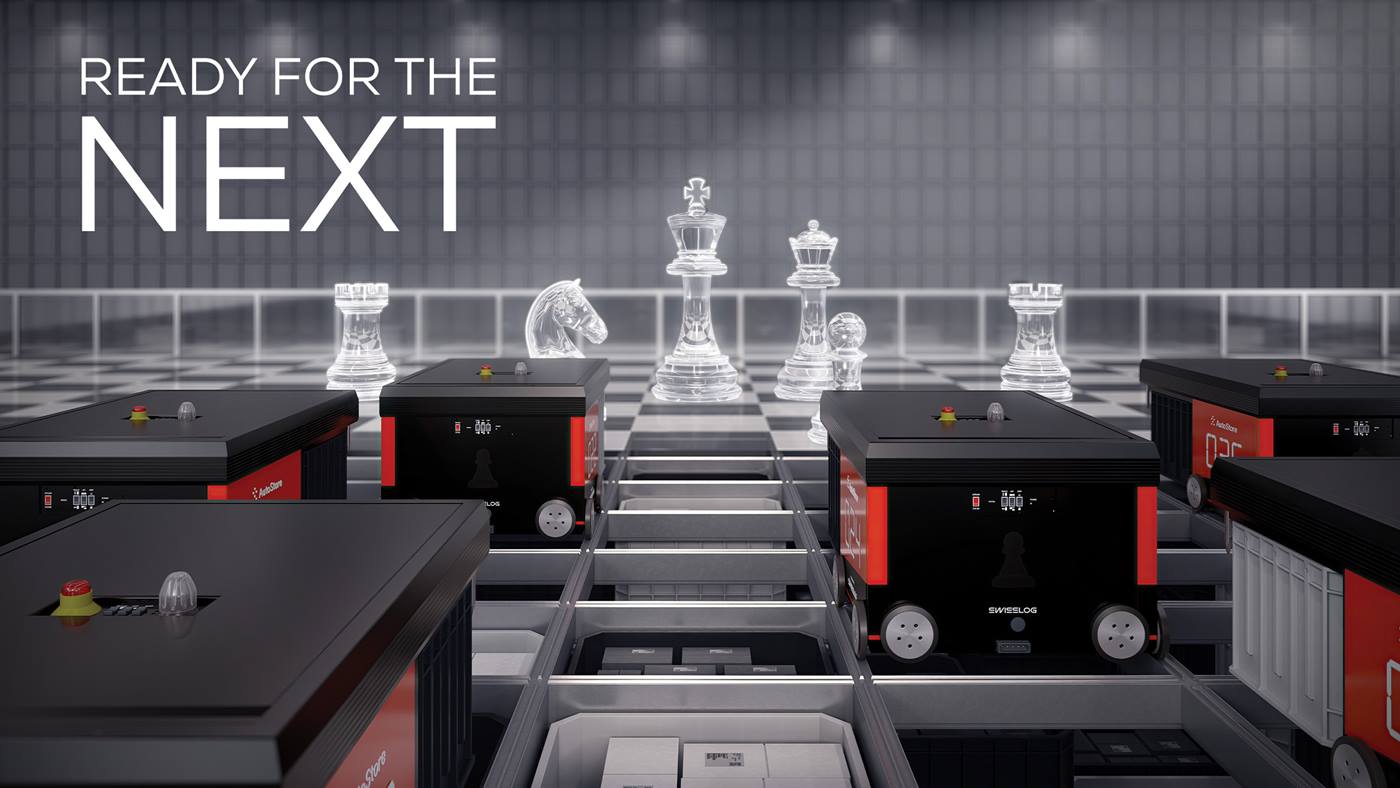
“Modern logistics has become a strategic game of chess, where every move, every workflow, and every design decision is part of a larger masterplan,” said Bill Stenger, Senior Vice President of Sales, Swisslog Americas. “The question is no longer whether to prepare for what’s next, but whether your partner is equipped to help you do it.”
The Five Pillars
1. Outcomes over projects. Every automation investment should pass three operational tests. Can it sustain throughput in live production, not just at commissioning? Can it flex to accommodate volume spikes, SKU changes, and new fulfillment models? And can capacity grow without re-platforming? Software is the orchestration layer that holds those outcomes together long after go-live.
2. Automation as a journey. Early automation does more than improve picking speeds or reduce manual touches. It generates clean data, surfaces bottlenecks, and builds the connected infrastructure that makes every subsequent investment lower risk. A modular approach means capability can be added when needed, without downtime or overbuilding. Each phase compounds the value of the last.
3. Future-ready software. Readiness depends on a digital core that absorbs new demands without becoming unstable. That means a lean, predictable architecture and AI-ready data structures that allow intelligence to be adopted when it drives real outcomes. Open orchestration integrates mixed technologies without lock-in, giving operations a foundation to extend rather than overhaul.
4. Scalable, integrated technology. The strongest automation strategies scale while operations stay live. That spans AS/RS, shuttle systems, AMRs, cube storage, and case handling as SKU profiles evolve. A best-in-class integration mindset is essential: where a third-party technology is the strongest fit, it should be integrated. There is no prescribed path, only the one that best serves the operation.
5. People, expertise, and partnership. Technology determines what an operation can do. People determine whether it stays ready as the business evolves. Teams that remain engaged beyond go-live, helping operations anticipate change before it becomes urgent, make the difference. That continuity is what separates a project from a program, and a vendor from a long-term partner.
The full Ready for the Next framework, including customer examples and guidance on each pillar, is available at swisslog.com/ReadyForTheNext.