Automated storage and retrieval systems to increase efficiency and quality in warehousing
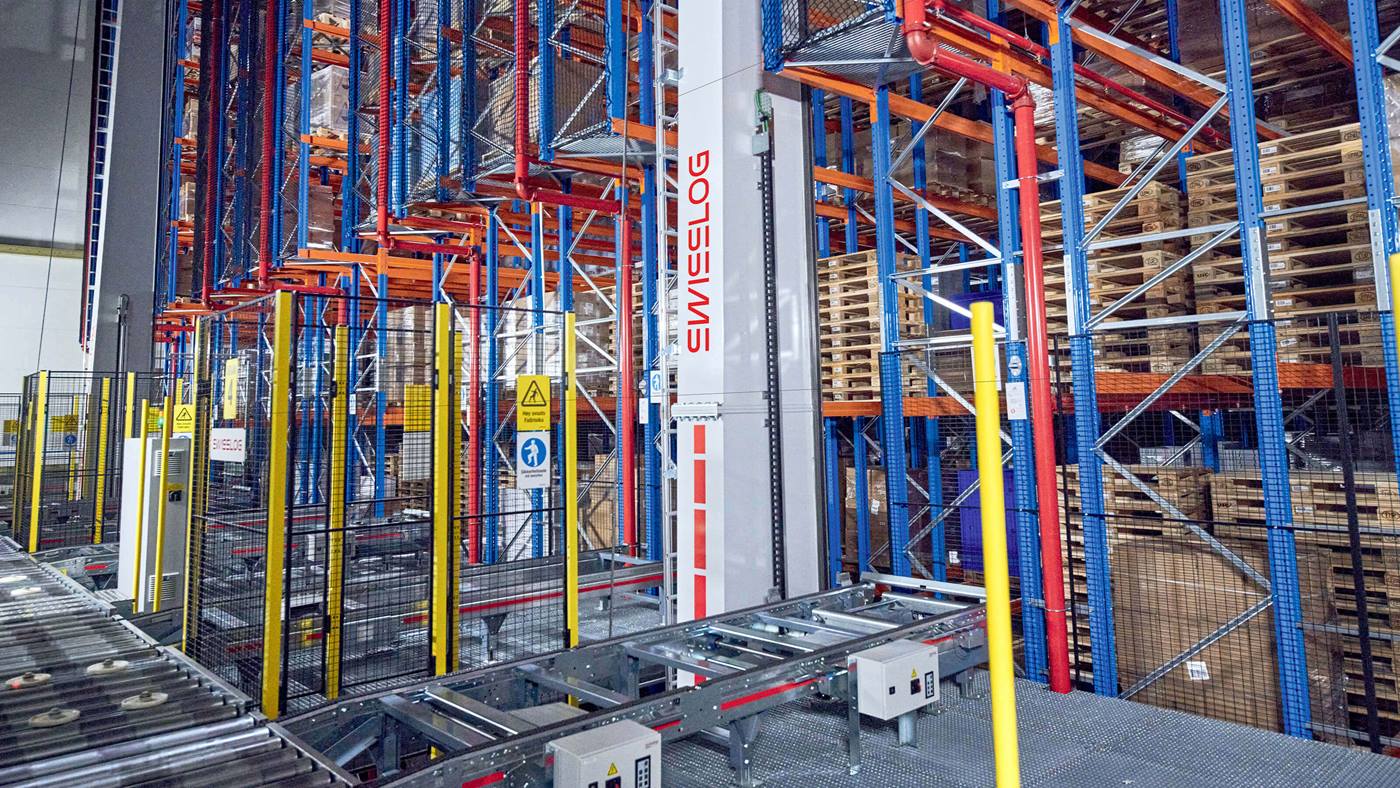
From the traditional high bay warehouse to innovative robot-based storage solutions, Swisslog offers you a wide range of traditional and advanced technologies for the automated storage and retrieval of pallets and smaller goods, such as cartons or bins. These fully automated systems boost warehouse quality, flexibility and efficiency.
Modular, flexible and software-driven ASRS for maximum efficiency
Are you looking for an effective automated storage and retrieval system to overcome your warehousing challenges?
Limited space, an awkward warehouse building, and/or increasing inventory in unusual shapes or sizes can all make it difficult to find the right ASRS solution. Further, your automated storage solution should be scalable while maximizing space and performance. Scalable solutions enable you to remain flexible enough to respond to changing market requirements like new product launches, demand increases and regulation changes.
Space is expensive. Swisslog always finds the most effective solution with the best price-to-performance ratio, transparent processes and greatest flexibility. With scalable ASRS systems, you can adjust capacities to increase throughput without additional capital expenses or the need for more warehouse space.
FAQ Automated Storage and Retrieval Systems (ASRS):
Benefits, costs, and implementation
What is an automated storage and retrieval system (ASRS)?
Put simply, an ASRS is an advanced solution that relies on robotics, mechanical components, and software to move goods quickly and accurately to and from warehouse storage. Although ASRS solutions differ in terms of size, capacity, infrastructure requirements, and type of robotics used, they share common elements:
- Storage structures, such as racks
- Material handling equipment, such as conveyors
- Robotics, such as stacker cranes or shuttles
- Warehouse management software to monitor the entire process
What are the different types of ASRS solutions?
There are many kinds of ASRS solutions for good reason—each warehouse or distribution center has unique needs. A high-level way to categorize ASRS is by ”components” and “structures.”
Warehouses use ASRS components, such as carousels and vertical lift modules, alongside workers and existing equipment. In contrast, ASRS structures rely on robotics for all steps in the storage and retrieval process. Structural ASRS can be further categorized by load size: unit-load, mini-load, and micro-load.
- Unit load: These robust systems handle large, heavy loads such as pallets. Unit-load ASRS may include cranes, fixed or movable aisles, or even deep-lane storage to maximize space in warehouses with limited SKUs.
- Mini load: Solutions designed to quickly and efficiently move vast SKUs of small- and medium-sized items. Mini-load ASRS solutions typically comprise shelving systems, rack aisles, conveyor systems, and workstations.
- Micro load: As the name suggests, micro-load ASRS are designed specifically for small items. Generally, these storage systems include a rack and extractor mechanism, such as a small shuttle system.
Provider perspective: Some structural ASRS are designed to be fully autonomous. For example, in robotic cube storage systems, shuttles travel through high-density cubic edifices to store and retrieve items.
Similarly, Swisslog’s CarryPick system uses intelligent automated guided vehicles (AGVs) to store and pick items in modular racks. Unlike typical robotic cube storage systems, CarryPick can integrate into existing spaces and expand as needed.
Are there any fully automated warehouses?
Most warehouses rely heavily on automation rather than manual labor to complete work. According to the United States Bureau of Labor Statistics, only 20% of stockers and order fillers in the logistics industry work in warehousing. However, fully automated warehouses—warehouses that operate without a human workforce—remain uncommon.
Increasingly, however, warehouses are using fully automated solutions in specific sections of their facility. For example, an e-commerce fashion company in Dortmund implemented an autonomous ASRS system to process, store, and pick clothing to meet increasing order volumes.
The system dramatically increased storage capacity while using only 40% of the space of a conventional storage system. Intelligent robots bring goods to workers for packing, making the warehouse mostly, but not fully, automated.
What are the benefits of ASRS for my warehouse?
Implementing ASRS can transform your warehouse’s efficiency, throughput, and cost-effectiveness. ASRS solutions benefit warehouses through:
- Improving order accuracy, which reduces inventory loss and increases customer satisfaction
- Optimizing storage space, increasing capacity to accommodate additional SKUs without building new facilities, expanding existing ones, or renting space
- Increasing throughput by up to 300%
- Enhancing flexibility so warehouses can handle fluctuations in product volume
- Improving product traceability, giving workers a clear view into inventory counts and locations
- Creating new storage possibilities, such as vertical systems, to increase storage density
- Stabilizing staffing challenges, supporting existing workers and improving employee retention
- Minimizing energy use to reduce carbon footprint
- Increasing efficiency in refrigerated or freezer environments (for select systems)
How ASRS solves challenges facing warehouses
Increased efficiency meets rising consumer demand
Today’s warehouses face compounding challenges. From consumers, warehouses must accommodate frequent, complex orders and rising demand for same-day shipping and rapid last-mile delivery. Automating storage and retrieval increases throughput and enables 24/7 operations, helping warehouses meet expectations.
Improved flexibility helps warehouses thrive amidst change
From supply chain partners, warehouses must mitigate the risks of logistical disruptions and material scarcity and navigate the challenge of communicating with customers, transportation providers, and third-party vendors.
ASRS solutions increase storage capacity, allowing warehouses to hold extra inventory in case of disruptions. Warehouse management software (WMS) unifies inventory tracking and simplifies sharing information with vendors.
Automation helps reduce the impact of labor shortages
Warehouse workers are harder to find and retain, and wages are rising, complicating efforts to expand the workforce to meet demand. Warehouse work also poses safety risks, including accidents and strain-related injuries.
ASRS can supplement the work of existing employees, improve worker safety by handling heavy lifting or strain-inducing tasks, and enable more ergonomic workstations.
Enhanced technology supports omnichannel fulfillment
Retailer and distributor warehouses often have to fulfill both store replenishment and direct-to-consumer orders. ASRS can help warehouses manage orders and maintain the optimal storage layout to fulfill them quickly. Real-time tracking and intelligent software allow systems to adapt quickly to changes.
What is an example of an ASRS benefiting a warehouse?
Let’s contextualize the benefits of ASRS with a hypothetical use case. An e-commerce company is dealing with a growing number of SKUs and limited storage. They shuffle items around to make space, and workers struggle to fulfill orders in the chaos, slowing picking speed and increasing mis-picks.
The warehouse management team implements a mini-load ASRS to manage storage and retrieval. The ASRS adjusts storage locations based on SKU volumes and tracks items in near real time. Workers now know exactly where the inventory is. Order accuracy and fulfillment times increase.
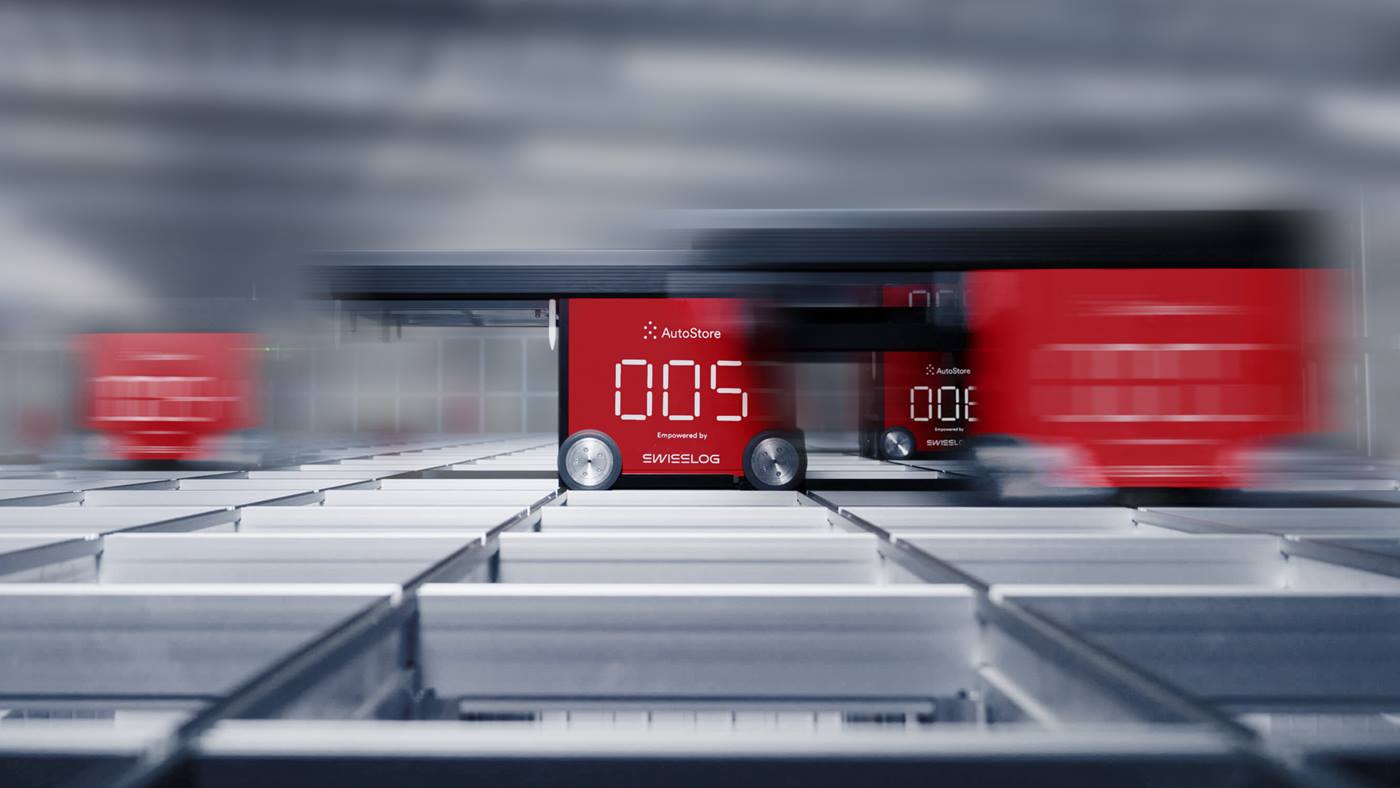
Provider perspective: Swisslog AutoStore systems increase storage density in warehouses handling large volumes of small items. These compact, high-throughput systems comprise bins stacked vertically. Over time, AutoStore systems learn which products have a higher rotation and place them on the top layer, further improving picking efficiency.
How can I improve my warehouse with ASRS?
ASRS solutions can improve worker safety, increase throughput and order accuracy, optimize space, and scale to meet demand. To improve your warehouse with ASRS, first identify the most challenging processes by asking:
- What steps take the most time?
- Where do picking errors originate?
- What problems do warehouse managers and shift workers notice?
Then consider what requirements your warehouse needs. Do you need something small that can fit in your existing space? Do you need a system that can work in deep-freeze environments? Do you need something that can handle heavy loads or large SKU volumes?
Once you’ve identified primary problem areas and warehouse requirements, look for ASRS optimized to meet exactly what you need. For example:
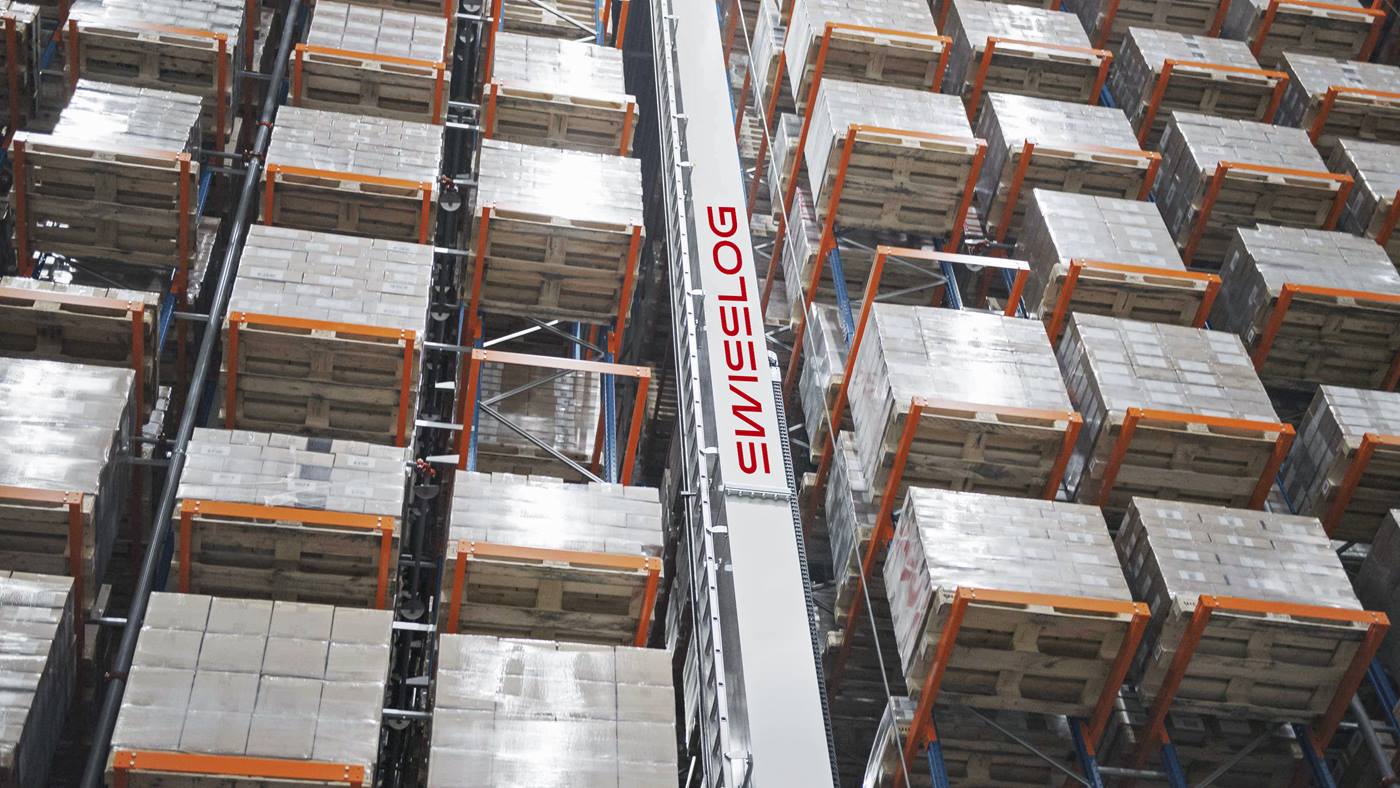
- Automated pallet warehouses provide fully automatic, high-density storage for goods stacked on pallets. These systems can handle heavy parts and often operate in refrigerated and deep-freeze environments. For faster throughput in challenging environments, consider automated pallet warehouses.
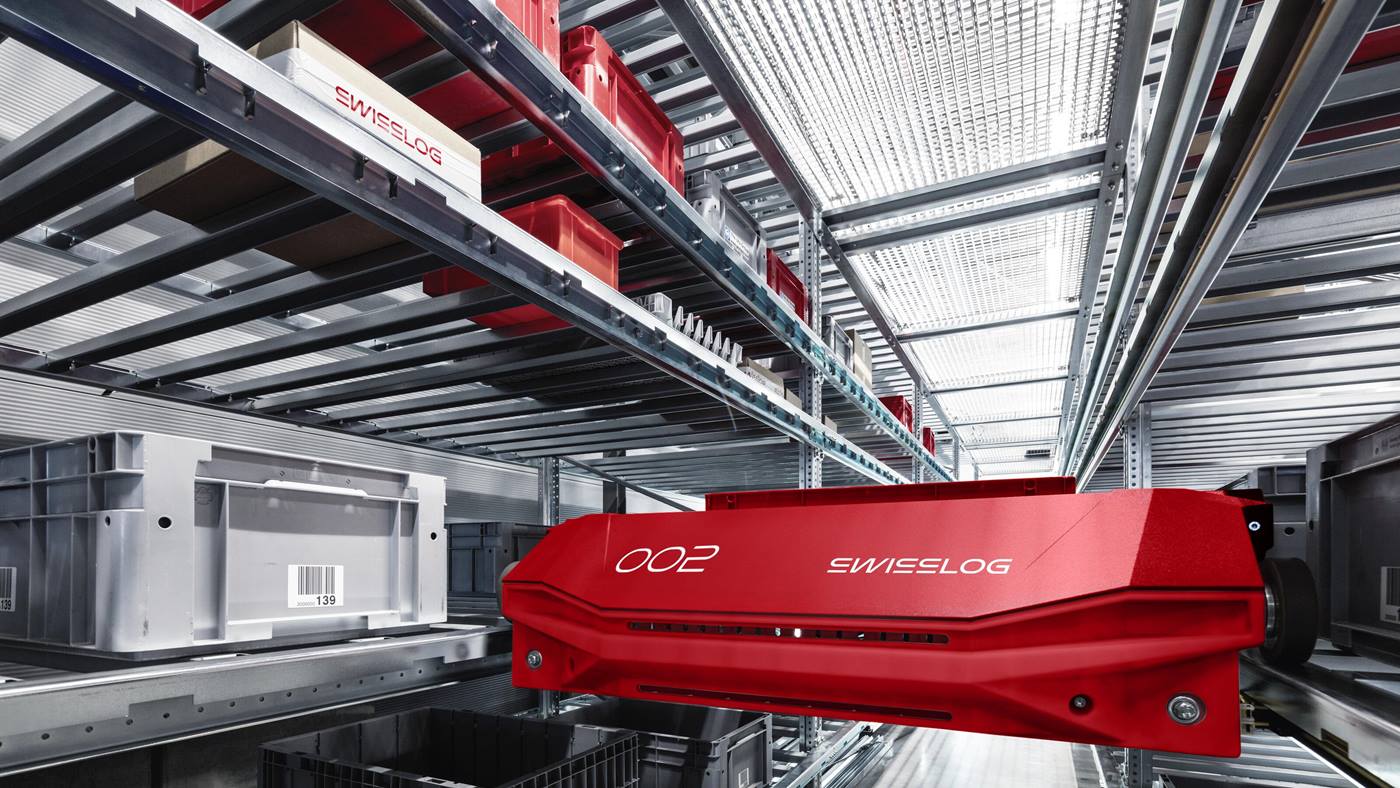
- Mini load ASRS solutions scale to accommodate increasing volumes of small- and medium-sized products. Warehouses that need to quickly expand SKU volume and capacity, especially those in e-commerce, will benefit from mini load ASRS.
How do ASRS improve warehouse efficiency?
Moving goods quickly and accurately through warehouses helps companies meet consumer demand. ASRS improves warehouse efficiency by replacing, or in many cases supporting, manual work:
- Safely transporting inventory to storage areas determined by WMS
- Storing products in high-density groupings in optimized locations
- Retrieving the correct items for each order, each time
Employees often work with ASRS during sorting and picking. Warehouse staff may also find new opportunities to fix or manage ASRS. Carefully consider how warehouse staff will adjust to and collaborate with newly implemented solutions. Create strategies to manage the transition and carefully consider task allocation and workload balance.
How much does an ASRS cost for mid-sized warehouses?
Determining costs is a major factor in aligning stakeholders with your vision for a better, faster warehouse. ASRS costs for mid-sized warehouses vary between solutions. Modular solutions, such as vertical carousels or buffer modules, can cost hundreds of thousands of dollars. System-wide solutions, such as a unit-load ASRS, can cost over a million dollars. More complex system-wide solutions can cost tens of millions of dollars.
Integrating an ASRS solution into your warehouse costs more than the initial investment in equipment and technology. Consider:
- Delivery fees
- Installation costs
- Technology integration costs
- Total cost of ownership (costs across the system’s lifecycle, such as maintenance and disposal)
- Downtime costs if installing on a brownfield site (retrofitting your warehouse)
- Building additional warehousing space on a greenfield site (constructing a new warehouse)
- Training costs
Keeping these costs in perspective is essential. In the past, ASRS solutions were only available to large warehouses and could cost $50 to $100 million. Today, mid-sized warehouses can choose scalable modular systems. The initial costs are lower, and over time, warehouses can expand by purchasing additional components.
Even before the full return on investment (ROI) is realized, mid-sized warehouses will realize cost offsets from ASRS, including:
- Labor savings by decreasing headcount and increasing employee retention
- Energy savings through modern, efficient equipment
- Inventory savings by minimizing theft and mis-picks
Provider perspective: Getting a customized quote is one of the best ways to truly understand the initial and ongoing costs of an ASRS. Speak with a Swisslog expert to explore the costs of implementing ASRS in your mid-sized warehouse.
Who you work with also affects the overall cost. Consider partners who provide ongoing technical support so you can get answers to minor problems before they grow into larger, more expensive issues. Also, choose systems that can integrate with your existing process and don’t require excessive training time or downtime.
What is the return on investment (ROI) for ASRS?
Investing in automation for your warehouse pays off. According to the Material Handling Institute, warehouses can expect to achieve ROI within two to five years after the initial investment. Although exact figures vary by level of automation, savings may include:
- $200,000 - $500,000 annually in labor costs for mid-sized warehouses
- $50,000 - $100,000 in reduced order errors
- 30% reduction in energy costs
In addition to operational savings, warehouses realize ROI through improved worker conditions and safety, more satisfied customers, and a competitive edge. Investing in new processes helps mitigate risk in changing market conditions—improving the flexibility, scalability, and efficiency of your warehouse.
How can I calculate ROI for an ASRS?
To calculate ASRS ROI for your warehouse, first take inventory of your existing storage and retrieval process. How much did it cost? How much are the ongoing operation and maintenance costs? Consider the total capital investment, including additional equipment, labor, and technology subscriptions—and adjust everything for inflation.
Now, compare that against the total costs of an ASRS solution. Project these figures over twenty years, including inflation assumptions and labor cost increases to accommodate rising wages. The resulting figure will give you a ballpark estimate of the ROI of switching from conventional, manual processes to an automated system.
Which companies offer ASRS solutions?
Warehouses looking for ASRS solutions have no shortage of options. The consulting firm Logistics IQ lists 82 ASRS and automated storage companies. Larger players include Swisslog, Knapp, Kardex, SSI Schaefer, Toyota Automated Logistics, and Dematic.
| Company | Employees | Presence | Established | Sectors | Approx. Revenue |
|---|---|---|---|---|---|
| Swisslog | 3,000 | 30 locations worldwide | 1900 | Food and beverage, grocery distribution, fashion and apparel, general merchandise | €700M (2022) |
| Bastian Solutions | 1,500 | North and South America, India | 1952 | Fashion and apparel, food and beverage, general merchandise, grocery and food retail, durable goods manufacturing, 3PL, parts and components | €300M (2026) |
| Kardex | 2,900 | 30 countries | 1989 | Warehousing, 3PL, retail and e-commerce, spare parts, wholesale, government | €800M (2024) |
| SSI Schaefer | 8,800* | 6 regions worldwide* | 1937 | Fashion and apparel, food and beverage, grocery and food retail, pharma and cosmetics, industrial, retail and wholesale | €2B (2024) |
| Knapp | 9,000 | 60 locations worldwide | 1952 | Healthcare, fashion, retail, food retail, industry, wholesale | €2B (2022) |
| Dematic | 11,000 | 35 countries | 1819 | Apparel, food and beverage, grocery, manufacturing, 3PL, consumer goods, general merchandise, healthcare, parcel, wholesale B2B | €800M (2026)** |
*Available statistics are for SSI Schaefer’s parent company, SSI SCHAEFER GMBH & CO KG.
**Available statistics are for the Intelligent Automation Solutions segment within Dematic’s parent company, KION Group.
With so many players in the ASRS market, warehousing companies would do well to evaluate providers’ experience and offerings carefully. To find the right ASRS provider for your needs, consider:
- Local, post-deployment support: Look for companies that offer support after the ASRS is installed, especially providers with a physical presence in your region.
- SKU profile: Bigger is not always better. Choose an ASRS provider whose solutions align with the SKU type and volume your facility processes.
- Industry experience: Years in operation can help set apart ASRS providers. Consider vendors with established reputations and expertise in your industry.
- Technology offerings: Incorporating new ASRS technology should not be a barrier. Look for vendors with WMS integration so that the systems can work together.
- Financial stability: High-quality, well-supported ASRS can function for decades. Work with a vendor who will be around as long as your system.
- Compliance: Consider vendors who meet regulatory requirements for product handling, especially in the grocery, food and beverage, and pharmaceutical industries.
- Reputation: Read customer reviews and case studies to see how well vendors carry through on their promises.
- Innovation: Intralogistics is changing quickly—look for vendors who are creating new solutions to meet emerging problems.
Provider perspective: In addition to being an established presence in the warehousing industry for over 45 years, Swisslog has a history of innovation—from supplying crane-based automation in the 1980s to implementing AutoStore systems in 2009. Today, we’re partnering with the KUKA Group to advance digitalization and technology in intralogistics.
Where can I find ASRS specific to retail inventory and general merchandise industries?
Warehouses handling retail and general merchandise must manage high SKU volumes quickly to meet consumer demand. Consider ASRS solutions with high-density storage capacity, such as unit-load or micro-load systems. Both AutoStore and Swisslog specialize in ASRS for retail.
As SKU volumes continue to grow for retailers, especially in e-commerce, warehouses in this space should consider modular ASRS solutions. These systems can scale easily to accommodate additional items without complicating existing processes.
What ASRS are available for warehouses serving the grocery and food and beverage industries?
Grocery and food and beverage industries often require refrigerated or freezer environments to preserve the quality of perishable items, keeping them fresh for consumers. Look for an ASRS designed to operate within varied temperature conditions.
Provider perspective: Storing grocery items often requires a range of operating temperatures—from room temperature to frozen. Swisslog created a tri-temperature ASRS solution using AutoStore technology for French gourmet food provider La Réserve des Saveurs.
The ASRS handles fresh, frozen, and dry products within two side-by-side systems linked by a conveyor, with picking and replenishment stations at a single point. Creating an ASRS solution instead of relying on a separate cold-storage warehouse helped optimize storage capacity, shorten order delivery times, and reduce the food provider's carbon footprint.
How do I integrate ASRS into my existing warehouse management software (WMS)?
Even the most efficient ASRS solutions won’t show returns if they can’t talk with what you already have. Integrate ASRS into your existing WMS internally, through your information technology staff, or choose a system designed specifically to work with an existing WMS. Your organization’s software professionals will likely still need to be involved, but the process will be much simpler and faster.
Smart technology, including large language model-powered software, is a large part of how ASRS benefits warehouses. The software tells robotic components where to put items, and systems can learn over time how to optimize storage to fit warehouse flow. Algorithms allow robots to move quickly through shelving without colliding and track products.
Integrating ASRS software with existing WMS expands its ability. You get real-time inventory tracking and updates, as well as additional control over first-in, first-out practices and batch tracking. This helps ensure you aren’t shipping expired or outdated products. Many ASRS solutions include software specifically designed to work with existing WMS and offer system integration expertise to support the process.
Provider perspective: Swisslog offers SAP Extended Warehouse Management (EWM) software to unify ASRS operation with other warehousing tasks, such as goods receipt, quality inspection, production supply, picking, returns, value-added services, and shipping.
Managing all warehousing tasks within a single platform simplifies the work and ensures nothing is missed. Warehouses can also use the data gathered within the platform to uncover inefficiencies and optimize operations.