AutoStore Fall Release 2026: Swisslog insights on the new FlexBinsPort™ for mixed-bin height handling
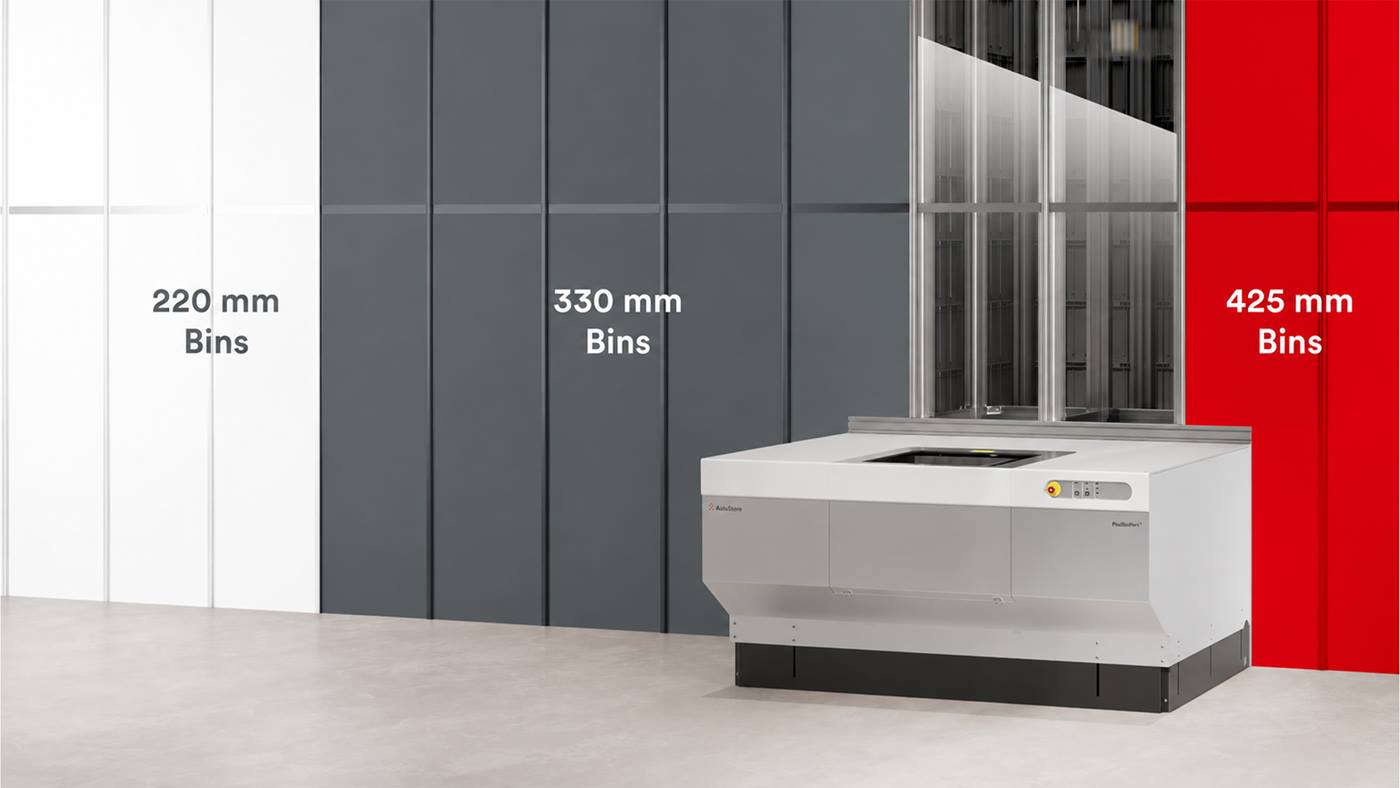
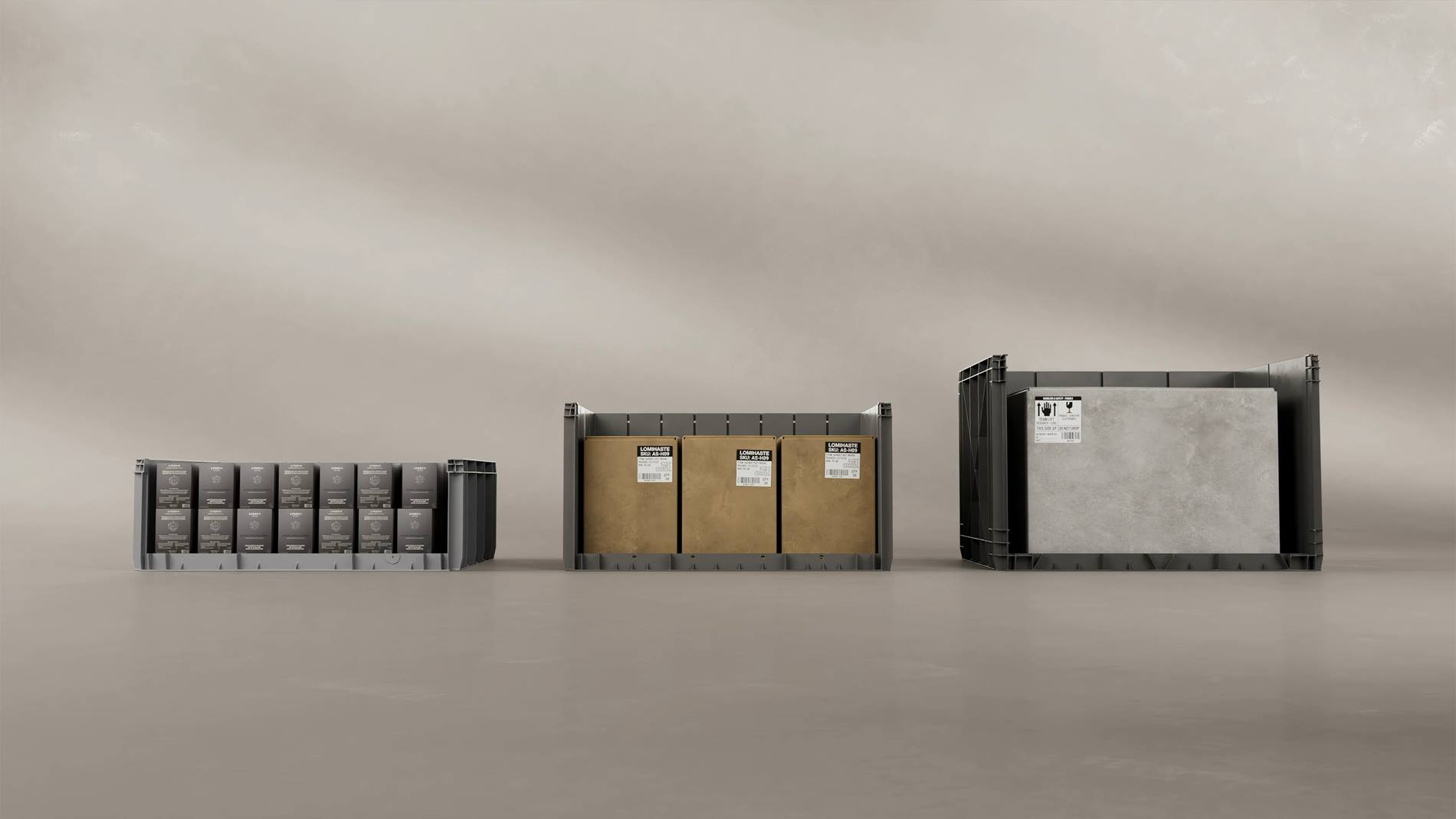
Shoe boxes, T-shirts, cosmetics, spare parts: few warehouses store products that are all the same size. In a manual warehouse, that’s easy to handle, because if you need a new location size, you simply add a new cardboard pick face. AutoStore, by contrast, has historically required a single bin height across the whole grid (220 mm, 330 mm, and 425 mm). Bins could be divided into smaller compartments, but different bin heights couldn’t be stored together.
That changed when AutoStore introduced FlexBins™ in 2025, which allowed several bin heights to share one grid and opened it up to a far wider range of products. The ports, however, could still only be used to pick from one bin height.
As a result, AutoStore customers faced a compromise: either choose one bin height for the whole grid and accept wasted space, or mix bin heights and accept extra ports and more consolidation work downstream.
With FlexBinsPort, unveiled in AutoStore's Fall 2026 release, that compromise disappears: you can store each product in the bin it fits in and still pick every order at a single workstation. Below, we look at what that means for your operation, and how Swisslog can help you implement it.
FlexBins: one grid - three bin sizes
Before FlexBins, one AutoStore grid meant one bin height, so products either had to fit the bin, or be handled in a second system. Launched by AutoStore in autumn 2025, FlexBins removed that restriction by allowing several bin heights in the same grid.
With FlexBins, each product can be stored in the bin that suits it. Bins of each height are organized in dedicated zones, and the grid is designed and simulated around that mix from the outset. No special hardware is needed: the robots, grid and controller stay the same, and you simply add bins in the heights you need.
The result is more storage capacity in the same footprint and simpler operations, particularly where SKU profiles vary widely.
| Key facts* | AutoStore solution FlexBins |
|---|---|
| Bin heights | 220 mm, 330 mm and 425 mm |
| Max. stack height | 26 bins (220 mm), 18 bins (330 mm), 14 bins (425 mm) |
| Max. payload capacity inside the bin | Up to 30 kg per bin |
| Storage utilization improvement | + 10-15% storage utilization improvement through mixed-bin storage, by matching bin size to SKU profile |
| Grid layout | Each storage column holds one bin height |
| Typical uses | Fashion (shoes with apparel), grocery buffering, healthcare and industrial kitting |
* Specifications: AutoStore / AutoStore estimate
Previously, customers had to choose between storage density and coverage. Smaller bins minimized wasted space, while larger bins let a greater share of SKUs go into AutoStore at the cost of underused bin volume. As Swisslog's Dan Cahalan said at launch, "Customers with diverse product portfolios are excited to see more streamlined order fulfillment with mixed-case SKUs."
Until now, however, mixed storage came with one catch: each port still had to be dedicated to a single bin height. That is exactly what FlexBinsPort changes.
What FlexBinsPort is, and what it changes
FlexBinsPort is a new AutoStore workstation that handles all three standard bin heights at one port: 220 mm, 330 mm and 425 mm. Its design and operating experience are close to the CarouselPort™, which many AutoStore operators are already familiar with.
FlexBins solved storage, but not picking. Since each port was configured for a single bin height, orders containing SKUs from different bin sizes had to be picked at several ports. This fragmented workflow then required downstream consolidation, which added complexity, handling effort, and process time.
Prior to today’s release, Swisslog and the end-user had to decide at the design stage how many ports to dedicate to each bin type, for example separate ports for 330 mm and 425 mm bins. The operation then had to staff those workstations and keep adjusting staffing as demand shifted between item sizes. On top of that came the considerable complexity of consolidating items picked at different ports into a single outbound order.
The FlexBinsPort is designed to remove all three of these challenges as shown in the below table:
| AutoStore FlexBins systems | With conventional ports today | With FlexBinsPort |
|---|---|---|
| Storage | Several bin heights in one grid | Unchanged |
| Picking | Each port dedicated to one bin height | One port presents all three bin heights |
| Mixed-bin orders | Split across several ports, then consolidated | Completed at a single workstation |
| Port layout | Port count driven partly by the number of bin types | Port count driven by your throughput needs |
AutoStore plans to launch FlexBinsPort in Q4 2026, with first shipments in Q1 2027.
Where FlexBins and FlexBinsPort create value
The principle is simple: size the bin to the product. Small items go in 220 mm bins, so you’re not storing air, medium items go in 330 mm bins, and bulky items in 425 mm bins. At the port, the operator sees a single order, whichever bin each item came from.
Some examples of what this opens up:
- Fashion and sportswear: Shoe boxes in 425 mm bins, T-shirts in 330 mm bins, socks and accessories in 220 mm bins. One picker completes the full outfit order at one workstation.
- E-grocery: Small packaged goods are stored densely in low bins, and the order bag travels in a tall bin. Items are picked straight into the bag at the same port, a design that previously needed workarounds.
- Health and beauty, pharma: Small, high-value items are stored densely next to bulkier products, without dedicating ports to each.
- Spare parts and industrial: Screws and small components sit alongside larger parts, and kits are completed in one place.
- 3PLs: Clients with very different product profiles share one grid, and you can adapt the bin mix as your client portfolio changes.
Mixed-bin orders at one workstation, with less consolidation
Without FlexBinsPort, a mixed-bin order is split by bin height, and each part is picked at its own port. The parts then have to be brought back together before packing, often using conveyors, sorters or a manual consolidation area. That adds equipment, floor space, handling steps, and room for error.
With FlexBinsPort, the order is completed where it is picked. For your operation, that means:
- Reduced picking tasks: No reuniting partial orders after picking.
- Simpler downstream flows: You need less consolidation equipment and less space between picking and packing.
- Fewer split shipments: The whole order is ready at once, so it can be packed together.
- Flexible port planning: Ports are planned around order volumes and peaks, not around how many bin types you store.
- Easier to adapt: When your assortment changes, you adjust the bin mix rather than your port layout.
An extra option, not a replacement for CarouselPort
FlexBinsPort extends the AutoStore port portfolio, rather replacing the CarouselPort, which remains the right choice for many operations.
- CarouselPort is a proven, efficient port for processes that are using a single bin height.
- FlexBinsPort is designed for processes that are using mixed bin heights.
Many systems will combine both: CarouselPorts where a flow uses one bin height, and FlexBinsPorts where mixed-bin orders are common. The right mix depends on your order profile, and that is a design question to settle early.
Expert talk: Dan Cahalan on FlexBinsPort
Why does FlexBinsPort matter for customers? Customers with diverse product ranges have been asking for this for years. FlexBins let them store each product in the right bin, and FlexBinsPort now lets them pick the whole order at one workstation, enabling discrete order picking across different bin types.
Which customers should look at it first? Anyone storing a wide range of product sizes, such as fashion and sportswear, e-grocery, health and beauty, and spare parts. It also suits customers who want to both pick products and buffer outbound orders, since one bin type can hold stock while another holds outbound goods.
What does it change in the way you design a system? Frankly, it does add a fair amount of design complexity. Rather than specifying a single bin type, designers now need to work out the right quantity of each. The number of ports needs careful analysis too: the customer’s process determines the port rate, and the port rate determines how many ports are needed. Since processes vary by site, customer and application, it’s important to work with your integrator to get that number right.
What should customers keep in mind? Base the design on your real order and product data, not averages. For part of the flow, divided bins or a CarouselPort may still be the better answer. The goal is the right combination, not the newest port everywhere.
How does Swisslog help customers get it right? We simulate the bin mix and port layout against the customer's own orders and validate the design before go-live, drawing on more than 400 AutoStore projects for comparison. Our SynQ software, which can operate as a WMS, WES, or WCS, also brings more nuanced bin selection, choosing the bins that are best for grid performance. That allows us to control a mixed-bin AutoStore more seamlessly and efficiently.
What it means for your system design, and how Swisslog helps
Every AutoStore partner gets FlexBinsPort at the same time. What makes the difference for your operation is how it is designed in: the right bin mix, the right number and type of ports, and a downstream flow that turns the time saved at the port into faster deliveries.
- We get the bin mix right from the start. Once you have bought a set number of bins of each height, running short of one size causes real operational problems. We analyze your product dimensions, stock levels and expected growth to size the mix for today and tomorrow.
- We choose the right port for each flow. Whether that’s FlexBinsPort, CarouselPort, divided bins or a combination. We base the choice on your actual order profile, not on what is newest.
- We design the whole system, not just the grid. Packing, right-sized cartons, sortation and dispatch are designed alongside the grid as one interdependent system. A mixed-bin picking station isn’t always the right fit, and its downstream implications can be significant.
- We prove it before we install it. We simulate the bin mix and port layout against your own orders, test the warehouse software against the AutoStore controller before going to site, and run rate tests before go-live.
- We review your existing grid. If you already run AutoStore with Swisslog, we can assess whether FlexBins and FlexBinsPort would improve your storage density and picking, and how they would fit your current layout.
As a leading AutoStore integrator worldwide, with more than 400 projects delivered since 2009, Swisslog brings both the design experience and the full portfolio around the grid to make FlexBinsPort work for your business.
Do you store a wide range of product sizes?
FlexBinsPort could change what AutoStore can do for your operation. Talk to Swisslog's AutoStore specialists about the right bin mix, port layout and downstream flow for your operation.