Automated case handling and buffering with AutoCase™
Bringing cases and eaches together in one automated system
For many warehouses, cases and individual items still live in two separate worlds.
Cases may be buffered on pallets or stored in a dedicated automation system before being manually opened and decanted into an AutoStore system for each-level storage and picking. It works, but it creates additional handling, storage requirements and process complexity.
AutoStore’s introduction of AutoCase™ in 2025 changed that by bringing full cases directly into the AutoStore grid.
Cases could now be automatically inducted, stored and retrieved within the same high-density system used for individual items. This created new opportunities to simplify the flow between receiving, storage, picking and dispatch, particularly for operations fulfilling a mixture of full-case and each-level demand. It was a major step forward, but the original hardware and software limited the size of case AutoCase could handle. Now AutoStore is taking the concept further.
With its Fall 2026 release, AutoStore announced an expanded range of cases AutoCase can handle and introduced FlowStream, enabling multiple AutoCase stations to work together on the same flow.
For warehouse operators, that potentially means more products handled automatically, greater capacity and less complexity around the grid.
And for Swisslog, which delivered the world’s first AutoCase installation, it expands the range of operations where the technology can create value.
What is AutoCase?
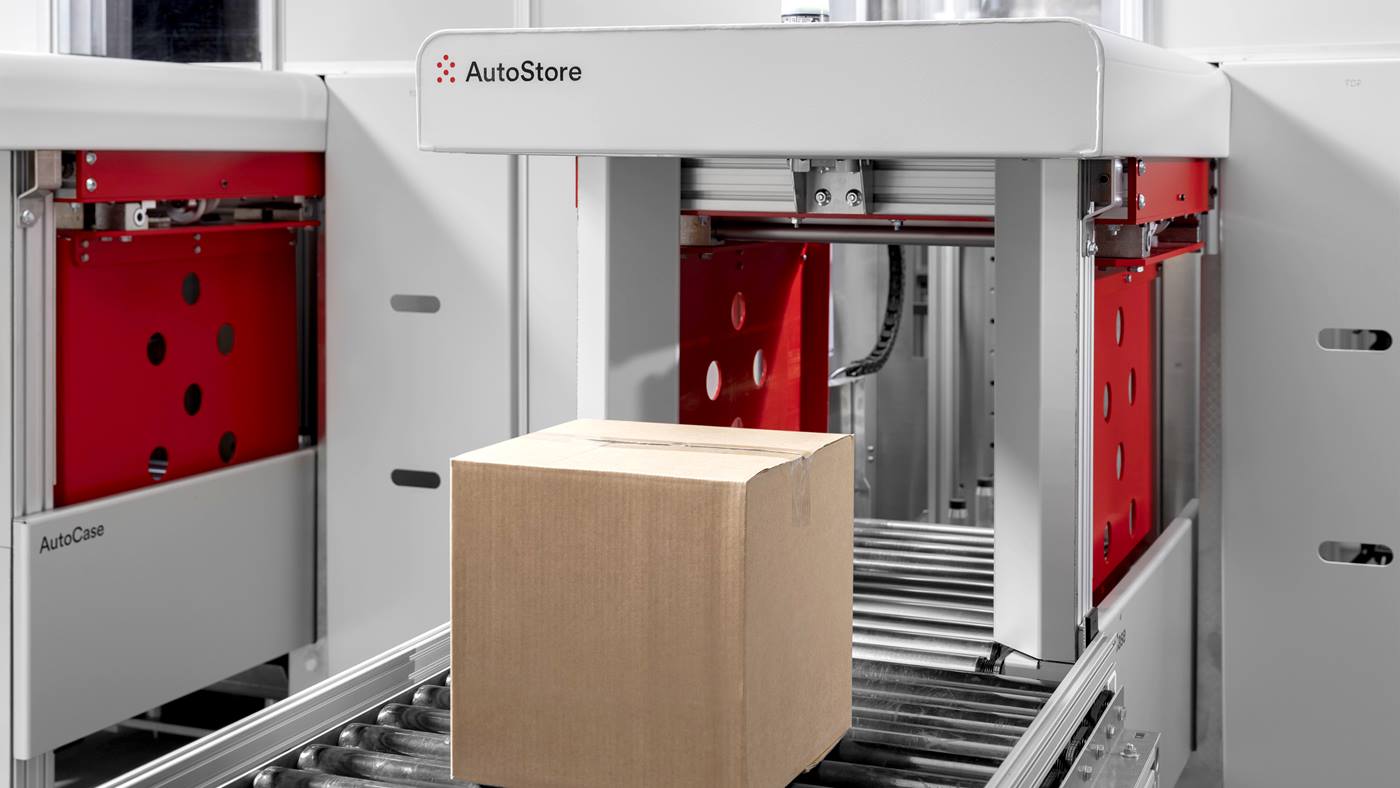
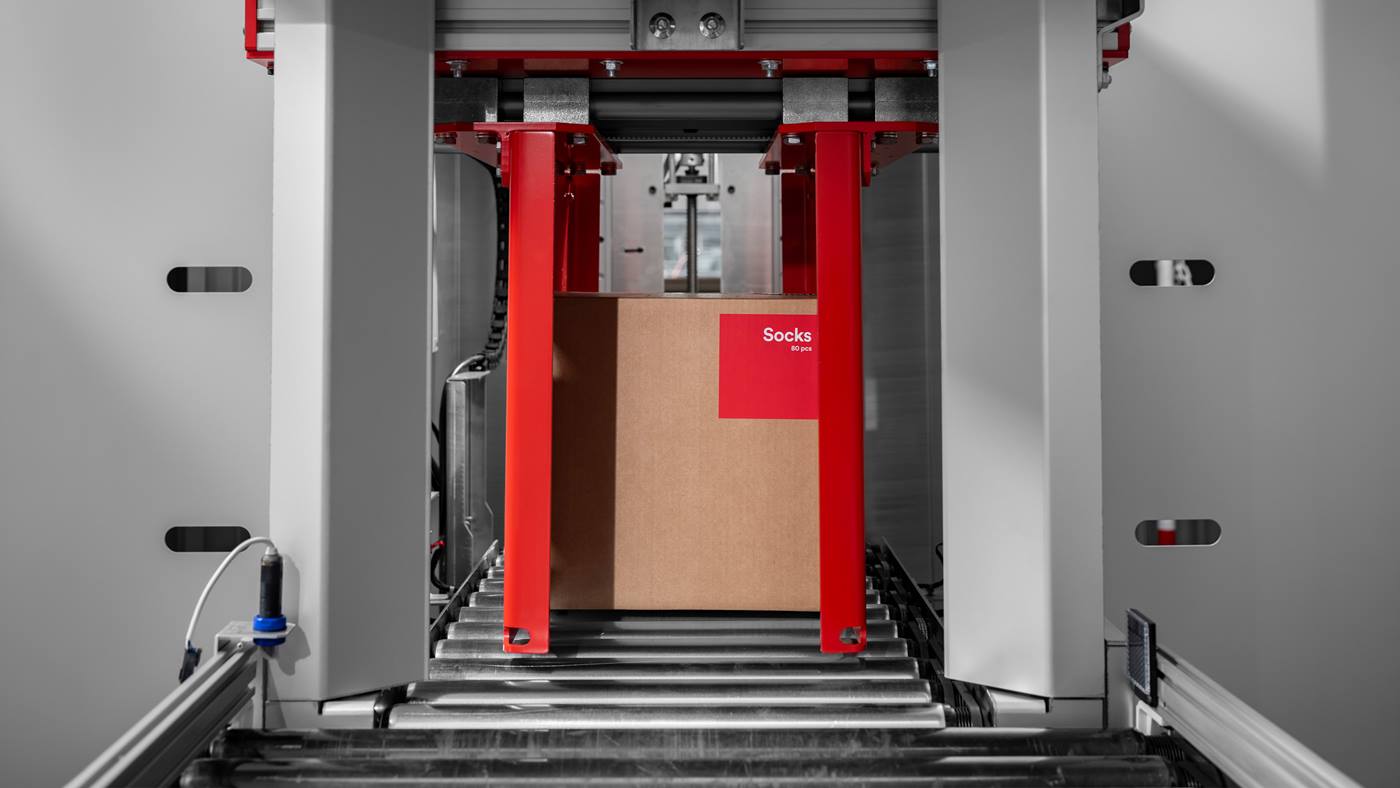
AutoCase is a native AutoStore functionality designed to automate the induction, storage and retrieval of full cases within an AutoStore grid.
At its heart is a dedicated AutoCase bin incorporating a movable false bottom. At an AutoCase Port, the walls of the bin lower around the false bottom to create a flat surface aligned with the conveyor. A case can then be automatically transferred into the bin.
Once inside, the bin walls rise again, allowing the robot to transport and store it in the grid just like any other AutoStore bin.
When the case is required, the process works in reverse. The bin is delivered to an AutoCase Port, and the case is automatically transferred onto an outbound conveyor, all without manual intervention during the process.
The result is one high-density system capable of supporting both full cases and individual items.
This opens an interesting possibility for mixed case-and-each operations. A sealed case can remain available to fulfil full-case demand while stored in the grid. If each-level demand increases, a case can instead be retrieved, opened and used to replenish individual-item inventory.
In other words, your inventory can remain flexible for longer.
AutoCase at a glance
| Key facts | Specification |
|---|---|
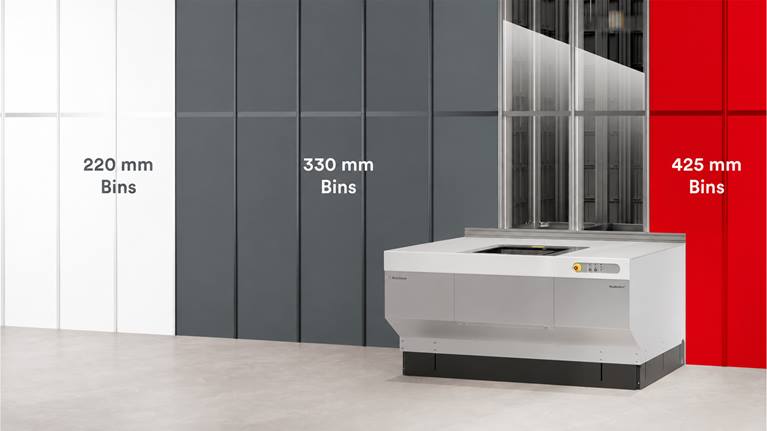
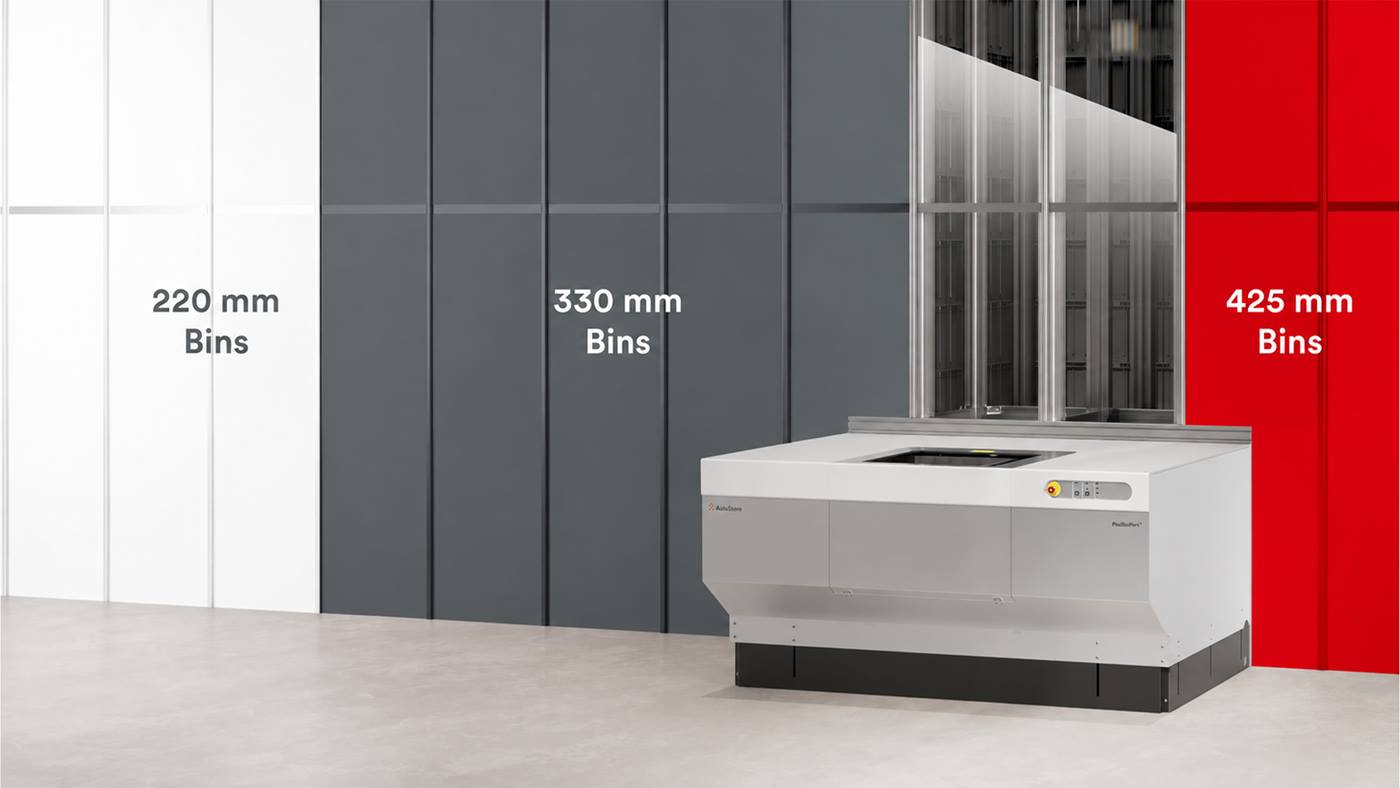
| AutoCase Port bin heights | 330 mm and 425 mm (dedicated AutoCase bins) |
| Case size | From 160 × 160 mm up to 600 × 400 mm (from Q1 2027) |
| Max. case weight | 28 kg per bin, with built-in weighing |
| Case types | Rigid cartons, corrugated cases and plastic totes; shrink-wrapped trays and open-top boxes if rigid and stable |
| Throughput | Around 150–210 cases per hour per station, depending on configuration and floor or mezzanine installation |
| Temperature range | +1 °C to +40 °C, suitable for chilled operations |
| Installation | New grids, or added to existing AutoStore grids |
Specifications: AutoStore

Is AutoCase right for your operation?
AutoCase delivers the most value where cases and eaches form part of the same inventory journey. It is worth a closer look if several of these apply to you:
- You receive inventory well before it ships, such as seasonal collections, promotions or imported goods that must be buffered for weeks or months.
- You fulfill the same product as both full cases and individual items, currently requiring separate case and each-handling processes.
- You fulfill B2C and B2B or store replenishment orders from the same site.
- You need to buffer and sequence orders ahead of packing, palletizing or dispatch, including route-stop sequencing.
- You want to automate more handling outside peak hours, across multi-shift operations.
- You already run AutoStore and want to bring case handling into your existing automated flow.
These characteristics make AutoCase particularly interesting for fashion and apparel, sporting goods, general merchandise, 3PL, omnichannel retail, grocery and consumer goods. However, AutoCase is not the answer to every case-handling challenge. Operations dominated by full pallets or cases outside the AutoCase profile may be better served by pallet ASRS, shuttle, conveyor or other technologies.
That’s why the starting point shouldn’t be AutoCase itself. It should be your inventory, orders and flows.
What’s new with AutoCase?
AutoStore’s Fall 2026 release brings two AutoCase enhancements: what AutoCase can handle and how far it can scale.
1. A wider range of cases, up to 600 × 400 mm
AutoCase is being extended to accommodate cases with a footprint of up to 600 × 400 mm, making greater use of the available AutoCase bin footprint. AutoStore expects this to ship from Q1 2027.
For customers, this potentially means:
- More cases can enter the grid. Larger supplier cartons previously outside the profile may now be suitable.
- Fewer exceptions require manual handling or separate storage.
- More SKUs can follow the same automated path from receiving to picking or dispatch.
But dimensions alone don’t determine whether a case is suitable.
Real cartons flex, bulge and vary from supplier to supplier. Height, weight, rigidity and tolerances all matter.
Swisslog therefore assesses your actual case population during solution design, using case data, physical samples and testing where appropriate. This helps establish what proportion of your real case profile is suitable for AutoCase before the design is finalizsed.
2. Several AutoCase stations, one task group (FlowStream)
FlowStream introduces another important development: multiple AutoCase stations can contribute to the same task group.
Cases from the same order, wave or process can leave through different AutoCase Ports while continuing downstream as one coordinated flow.
Previously, increasing the number of AutoCase Ports could create additional downstream sorting or sequencing requirements. FlowStream enables more of this logic to be managed within the AutoStore system itself.
What does this mean for you?
- Greater throughput. If a flow needs more capacity than one station can provide, multiple stations can work on that flow.
- A continuous flow downstream. Cases keep moving into packing, palletizing, or dispatch instead of queuing behind a single station.
- Capacity that grows with your flows. When one flow needs more throughput than a single station delivers, you add stations to the same task group instead of splitting the flow.
- Faster, lower-risk projects. A standard AutoStore function replaces custom integration work.
- New workflow possibilities. Store replenishment cases, for example, could be released through several AutoCase stations into one palletizing flow. Cases could also be buffered within the grid and released in sequence for dispatch.
The crucial point, however, is that AutoCase doesn’t operate in isolation.
The number and position of stations, conveyor design, accumulation, palletizsing capacity and dispatch flow all determine whether theoretical throughput becomes real operational performance.
“AutoStore keeps listening to partners and customers on how to take AutoCase from good to great. Widening the range of case sizes opens AutoCase up to more end customers and applications. Although FlowStream seems to be a less visible change, it lets partners greatly improve how AutoCase flows, simplifying upstream and downstream design and, in turn, improving ROI.”
- Dan Cahalan, Sales Director Americas, Swisslog
Proof in practice: the world’s first AutoCase
Nowaste Logistics, one of the leading logistics providers in the Nordic region, became the first company in the world to install AutoCase, with the system supplied by Swisslog.
Its challenge is familiar to many fashion and seasonal retail operations.
Large volumes of apparel arrive from Asia in cartons, often weeks before outbound fulfillment begins. Inventory may then need to support demand across an entire season lasting several months.
Previously, cartons were buffered on pallets in pallet racking before being replenished or decanted into AutoStore when required, creating additional manual handling.
With AutoCase, cartons can instead go directly into the AutoStore grid on receipt. When required, they can be retrieved as full cases for onward fulfillment or used to support individual-item picking.
“AutoCase is a solution that is as simple as it is ingenious. It eliminates time-consuming manual work and increases efficiency, speed, and storage density in one of our highly automated warehouses,” says Patrik Johnfors, Head of Solution Design & Implementation at Nowaste Logistics.
The application demonstrates an important shift: case buffering doesn’t necessarily need to be a separate manual process. It can become part of the automated inventory flow.
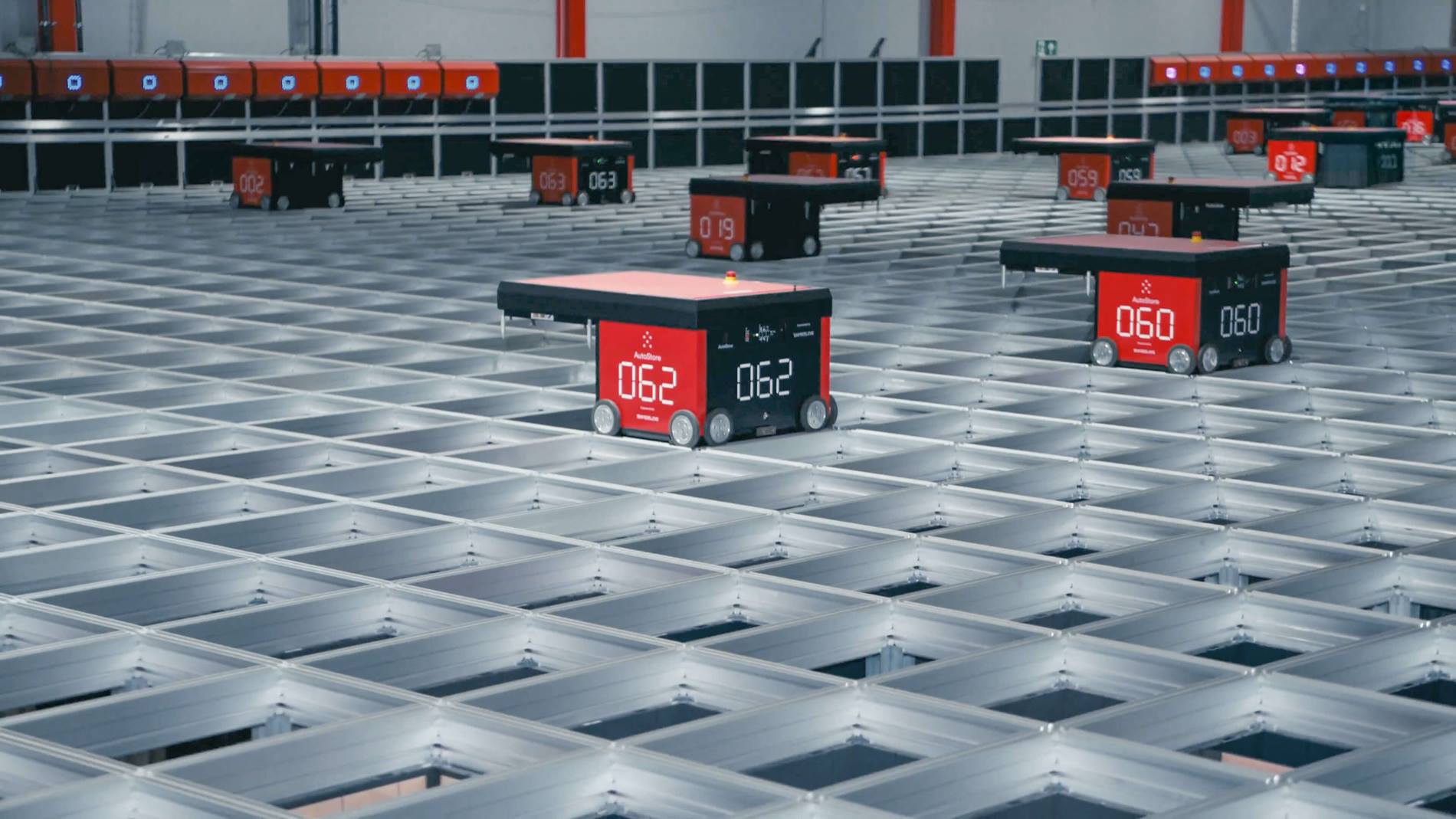
AutoCase provides the capability. Swisslog turns it into a solution.
AutoCase provides the functionality inside the AutoStore environment.
But much of the operational value is determined by what happens before, after and around the grid.
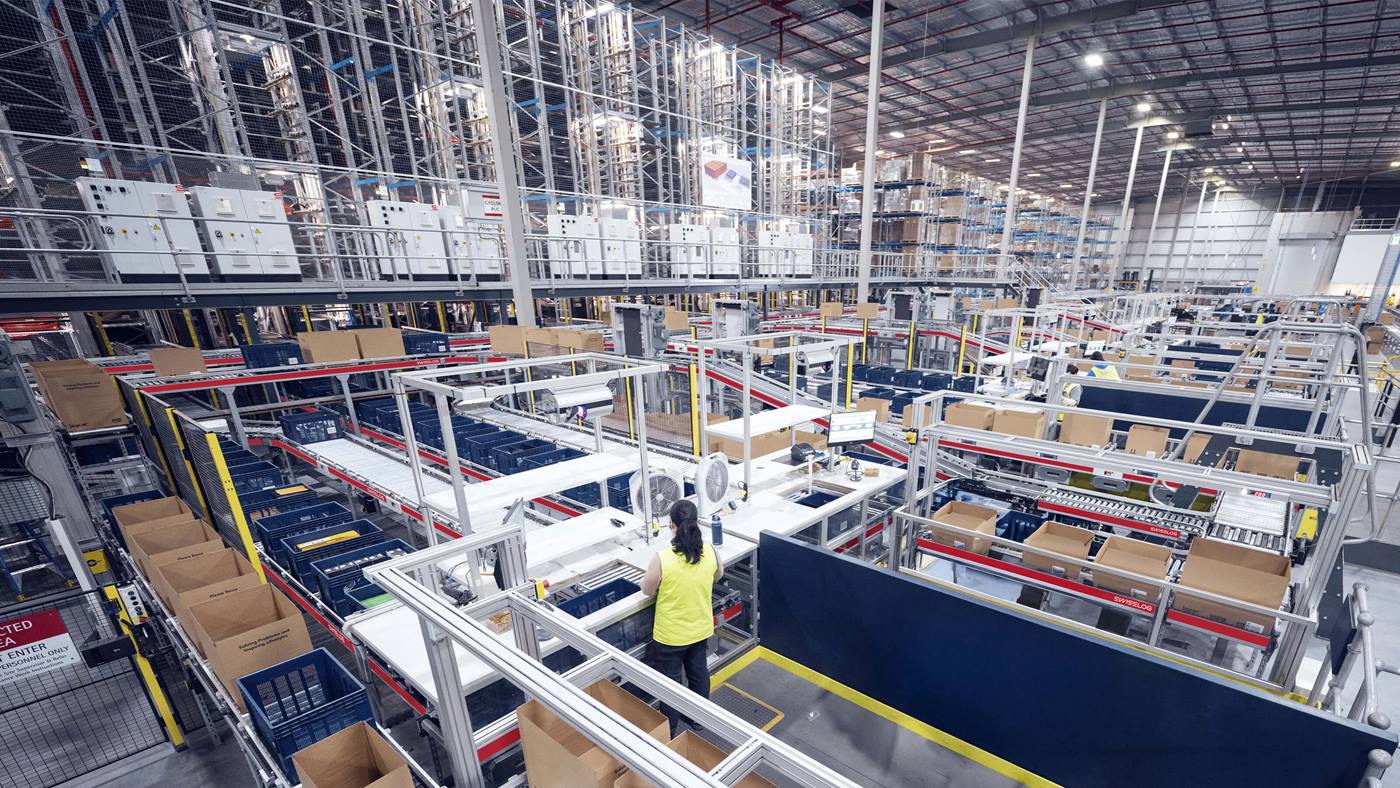
For example, cases still need to move from receiving into AutoCase, while outbound inventory needs to connect efficiently with picking, packing, palletizing and dispatch.
That’s where the system integrator makes the difference.
| Stage of your flow | AutoStore / AutoCase | Swisslog |
|---|---|---|
| AutoCase Location | Inside the grid and inbound or outbound port | Around the grid |
| Inbound | Cases inducted and stored without decanting | Goods receiving, depalletizing and conveying into AutoCase |
| Storage and buffering | Cases and eaches stored together in one grid | Storage strategy across technologies, with pallet storage for bulk and shuttles where they fit better |
| Picking | Cases can be opened by pickers at picking ports to allow product to be directly picked while avoiding a touch at a decanting operation. | Picking zones, manual or robotic, designed as one flow |
| Outbound | Full cases retrieved and sequenced; FlowStream across stations | Packing, palletizing, pallet storage, AMR transport and dispatch |
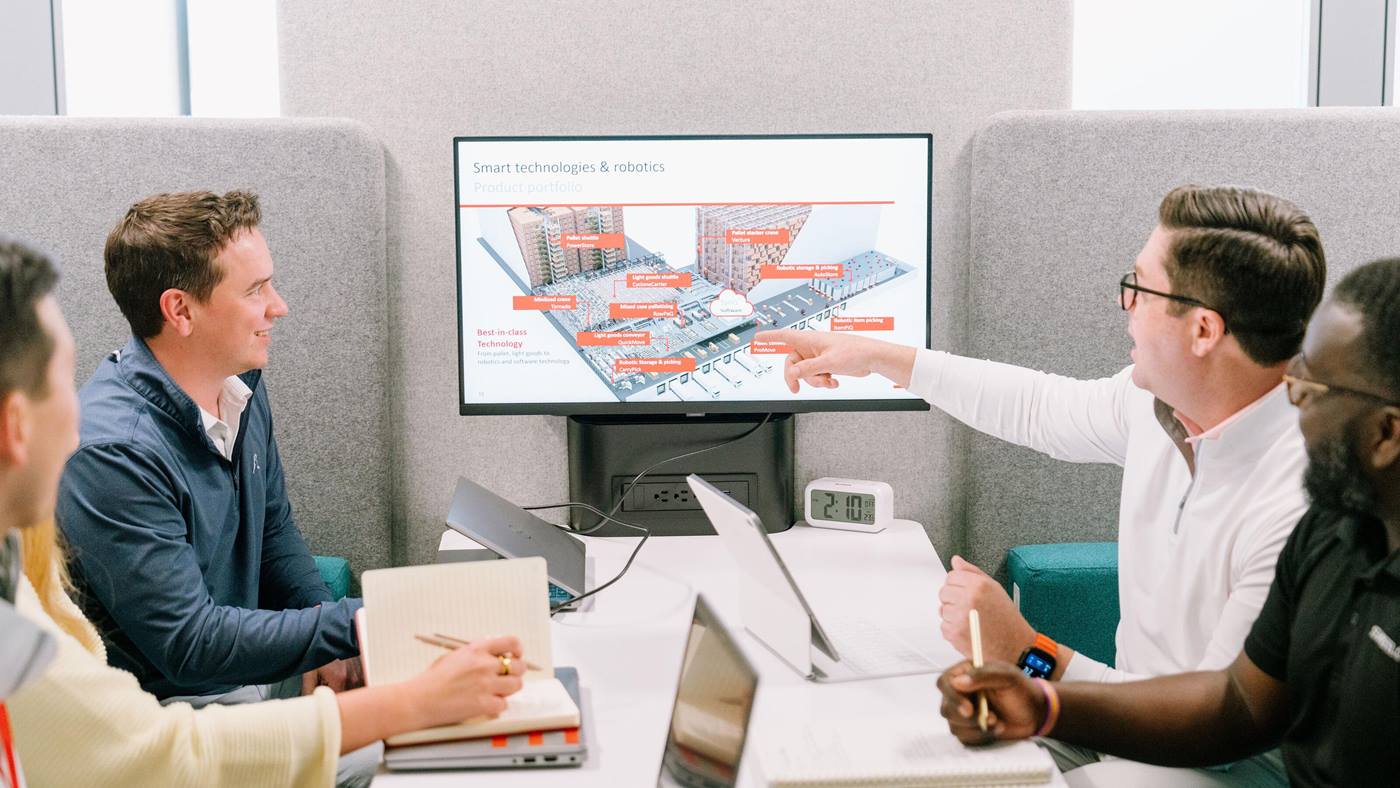
| Across the site | AutoStore controller and software | One software layer orchestrating every technology, powered by SynQ, plus lifecycle service |
How Swisslog delivers AutoCase
1. We start from your data
Before choosing technology, Swisslog analyzes your order profile, SKU and case profile and peak flows.
This helps determine which products are eligible for AutoCase, how much separate handling could potentially be eliminated and how many AutoCase stations and robots may be required.
More importantly, we can understand what changes across your overall warehouse if case buffering becomes part of AutoStore.
2. We design the complete flow
AutoCase shouldn’t be treated as an isolated station.
Swisslog integrates it into the wider process connecting goods receiving, depalletizing, storage, picking, conveying, palletizing and dispatch.
That also means choosing the right technology for each part of the operation. AutoStore may be one element alongside pallet ASRS, shuttle technologies, conveyors, robotics and AMRs.
3. We prove it before we install it
Swisslog simulates your design during the project’s early phase.
We then test the warehouse software against the AutoStore controller before going to site, and run rate tests on site before go-live. Your system is validated against your own order profile, not only on paper.
4. We bring experience and lifecycle support
Swisslog delivered the world’s first AutoCase installation and has delivered more than 400 AutoStore projects since 2009.
And our involvement doesn’t stop at go-live. Swisslog service teams support the complete solution throughout its lifecycle, helping maintain the availability, performance and throughput the operation was designed to deliver.
Conclusion
Ready to bring cases into your AutoStore?
Whether you are planning a new system or want more from an existing grid, Swisslog’s AutoStore specialists can assess whether AutoCase fits your case profile and flows and design a solution that works from goods receiving to dispatch.
FAQ
What is AutoStore AutoCase?
AutoCase is a native AutoStore function that automates the induction, storage and retrieval of full cases within an AutoStore grid. Cases are transferred into dedicated AutoCase bins at an AutoCase Port, stored by AutoStore robots like any other bin, and returned to a port and onto an outbound conveyor when needed. This means full cases and individual items can share one high-density system.
How does AutoCase get a case into an AutoStore bin?
Each AutoCase bin has a movable false bottom. At the AutoCase Port, the bin walls lower around the false bottom to create a flat surface level with the conveyor, the case is transferred in, and the walls rise again so the robot can store the bin in the grid. Retrieval works the same way in reverse.
What size cases can AutoCase handle?
With the AutoStore Fall 2026 release, AutoCase is being extended to handle cases from 160 × 160 mm up to 600 × 400 mm, weighing up to 28 kg, in 330 mm or 425 mm AutoCase bins. AutoStore expects the larger footprint to ship from Q1 2027. Height, rigidity and tolerances also affect suitability, so Swisslog assesses real case data and samples during solution design.
What is AutoStore FlowStream?
FlowStream is part of the AutoStore Fall 2026 release. It allows multiple AutoCase stations to contribute to the same task group, so cases from the same order, wave or process can leave through different AutoCase Ports and continue downstream as one coordinated flow. This adds throughput without creating extra downstream sorting or sequencing work.
Can AutoCase be added to an existing AutoStore system?
Yes. AutoCase can be installed as part of a new AutoStore grid or added to an existing one, allowing current AutoStore operators to bring case handling and case buffering into their automated flow.
Which operations benefit most from AutoCase?
AutoCase delivers most value where cases and eaches are part of the same inventory journey, for example in fashion and apparel, sporting goods, general merchandise, 3PL, omnichannel retail, grocery and consumer goods. It suits sites that buffer inventory for weeks or months, fulfil the same product as both full cases and individual items, or need to sequence cases ahead of palletizing or dispatch. Operations dominated by full pallets may be better served by pallet ASRS or other technologies.